Trucking Accidents
Trucking Accidents Involve Multiple Defendants, Multiple Insurance Policies, and Aggressive Corporate Defense Teams
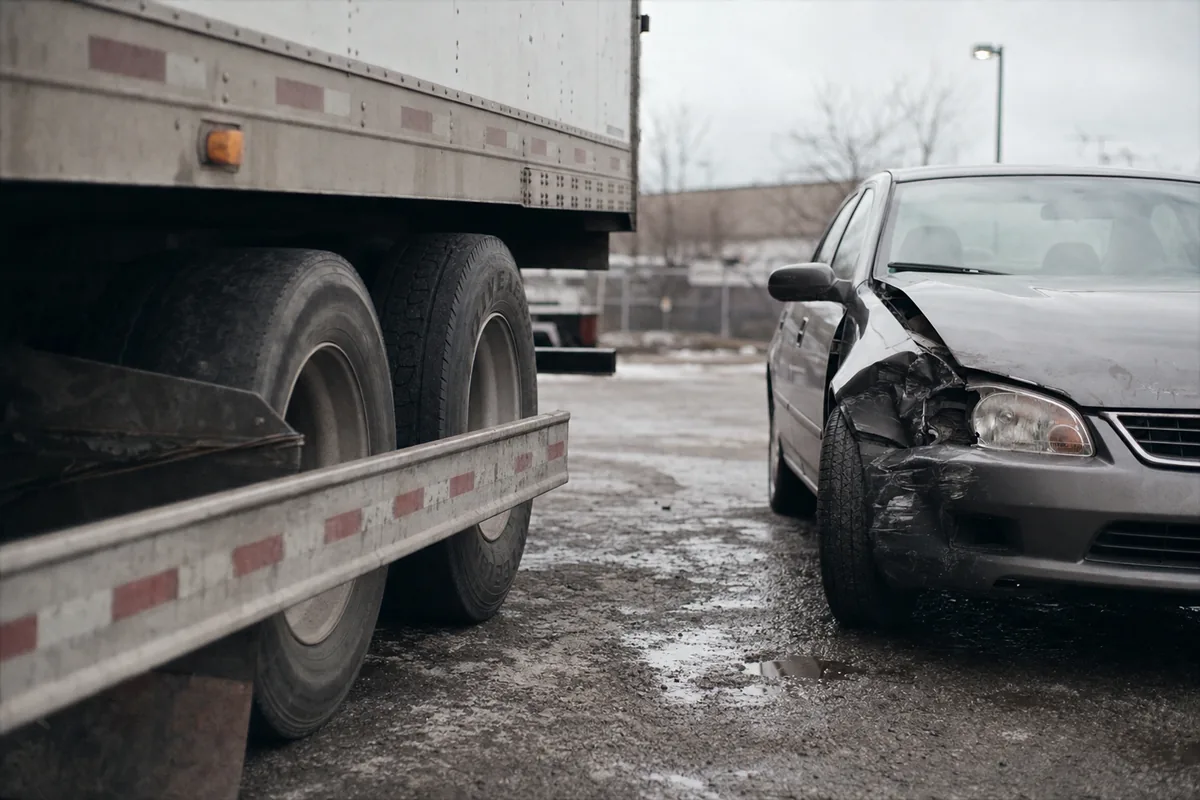
A collision with a commercial truck is nothing like a regular car accident — not in the severity of injuries, not in the legal complexity, and not in the resources the other side brings to fight your claim. Trucking companies and their insurers retain defense teams before the ambulance leaves the scene. They deploy rapid-response investigators to the crash site, download electronic data from the truck's black box, and start building their defense within hours. If you don't have an attorney doing the same thing, you're already behind.
At Koussan Law, I've handled trucking cases involving tractor-trailers, tanker trucks, flatbeds, and delivery vehicles across Michigan's highways. The damages in these cases are catastrophic — traumatic brain injuries, spinal cord damage, amputations, wrongful death. And the recoverable compensation reflects that severity, because commercial trucks carry insurance policies that typically start at $750,000 and go up to $5,000,000 or more depending on the cargo.
Why Trucking Cases Are Legally Different
Trucking accidents involve layers of liability that don't exist in car accident cases. The truck driver may be liable for negligent driving — fatigue, distraction, impairment, speeding. The trucking company may be liable under respondeat superior for employing the driver and under direct negligence theories for inadequate hiring, training, supervision, or maintenance. The cargo loader may be liable if improper loading caused a rollover or cargo spill. The truck manufacturer or parts supplier may be liable if a mechanical failure — brakes, tires, steering — contributed to the crash.
Federal Motor Carrier Safety Regulations (FMCSRs) under 49 CFR Parts 390-399 impose strict requirements on commercial carriers: hours of service limits, mandatory rest periods, vehicle inspection requirements, drug and alcohol testing, driver qualification standards. Violations of these federal regulations are powerful evidence of negligence — and trucking companies know it, which is why their defense teams move fast to control the narrative.
The Evidence Disappears Fast
Commercial trucks are equipped with Electronic Logging Devices (ELDs) that record hours of service, and many have Event Data Recorders (EDRs or "black boxes") that capture speed, braking, and other data in the seconds before a crash. This data is critical to proving your case — and it can be overwritten or "lost" if you don't send a spoliation letter immediately. I send preservation demands within 24-48 hours of being retained on a trucking case. I've seen what happens when that evidence disappears: it becomes your word against a corporate defense team with unlimited resources.
Frequently Asked Questions
Q: Who is liable in a Michigan trucking accident?
Potentially multiple parties: the truck driver, the trucking company (both vicariously and directly), the vehicle owner if different from the carrier, the cargo shipper or loader, and the truck or parts manufacturer. Each party may carry separate insurance. Identifying every liable party is critical because it multiplies the available insurance coverage. I investigate every trucking case from the driver's logbook to the company's safety record to the truck's maintenance history.
Q: What federal regulations apply to trucking accidents?
The Federal Motor Carrier Safety Regulations (49 CFR Parts 390-399) govern commercial trucking. Key provisions include hours of service rules limiting driving to 11 hours after 10 consecutive hours off duty, mandatory drug and alcohol testing, vehicle inspection and maintenance requirements, and driver qualification standards. Violations of these regulations establish negligence per se in many jurisdictions. I use the trucking company's own compliance records — or lack thereof — as evidence against them.
Q: How long do I have to file a trucking accident lawsuit in Michigan?
Three years from the date of the accident under MCL § 600.5805 for a negligence lawsuit. Your PIP claim deadline is one year under MCL § 500.3145. But in trucking cases, the practical deadline is much sooner — critical evidence like ELD data, black box recordings, and driver logs can be overwritten or destroyed within weeks. Contact an attorney immediately after a trucking accident. The first 48 hours are the most important for evidence preservation.
Q: What damages can I recover in a Michigan trucking accident case?
Economic damages include medical expenses, lost wages, future earning capacity, rehabilitation, and adaptive equipment. Non-economic damages cover pain and suffering, emotional distress, loss of enjoyment of life, and disfigurement. In cases involving egregious conduct — like a driver falsifying logbooks or a company knowingly putting an unqualified driver on the road — punitive damages may apply. Commercial truck insurance policies typically provide substantially higher coverage than personal auto policies, which means the potential recovery is correspondingly larger.