Pain and Suffering Damages in Michigan: How They Work
Pain and suffering is the largest component of most Michigan personal injury settlements, yet it's also the most misunderstood. Unlike medical bills or lost wages, pain and suffering damages compensate for the subjective, non-economic impact of your injuries — and in Michigan, special rules govern when you can recover them.
The Serious Impairment Threshold
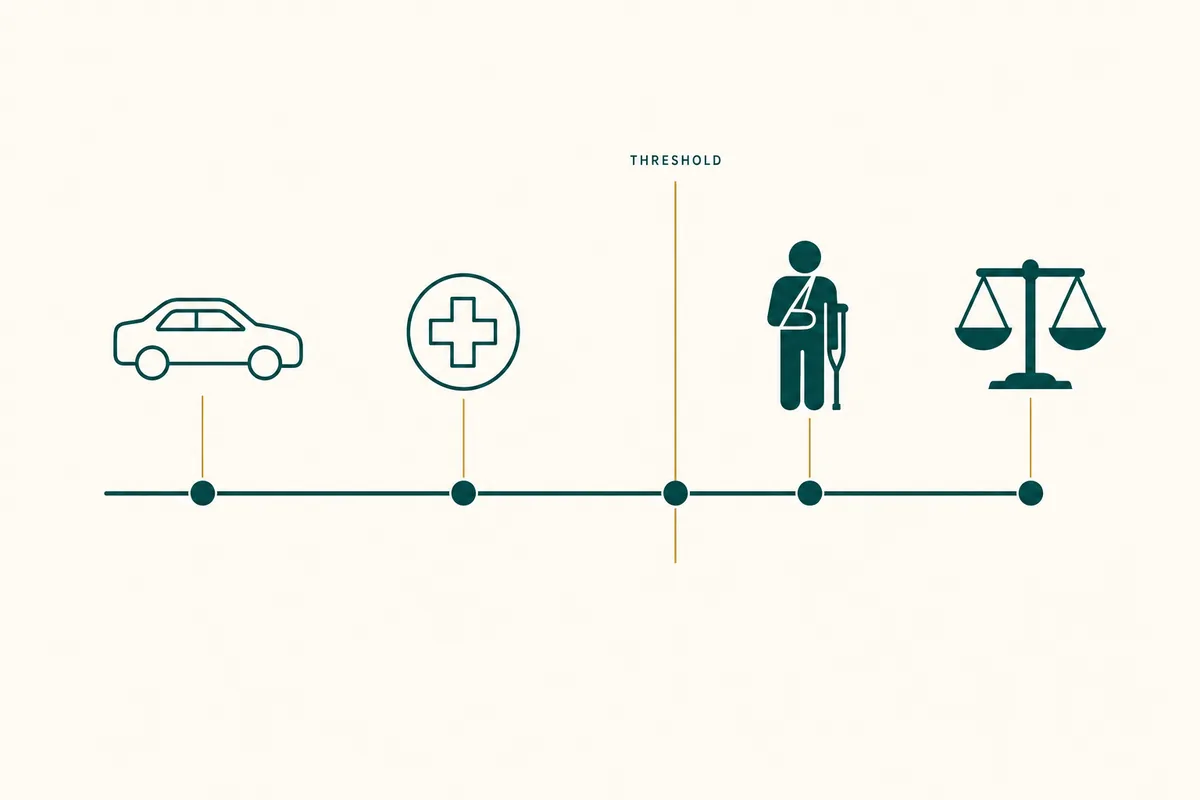
In auto accident cases, Michigan's no-fault law restricts pain and suffering claims to injuries that cause "serious impairment of body function" or "permanent serious disfigurement" under MCL § 500.3135. The Michigan Supreme Court defined serious impairment as an objectively manifested impairment of an important body function that affects your general ability to lead your normal life. Fractures, herniated discs requiring surgery, permanent scarring, and knee injuries requiring reconstruction typically meet this threshold.
How Pain and Suffering Is Calculated
There is no fixed formula for calculating pain and suffering in Michigan. Juries consider the severity and duration of pain, the permanence of injuries, the impact on daily activities and hobbies, emotional distress and mental anguish, loss of enjoyment of life, and the overall change in quality of life. Insurance companies use multiplier methods (multiplying economic damages by a factor of 2-5x) or per-diem calculations, but an experienced attorney knows these formulas often undervalue claims. If mental anguish is a major component of your case, an emotional distress lawyer can document and prove these damages properly.
Maximizing Pain and Suffering Recovery
The key to maximizing pain and suffering damages is thorough documentation: medical records showing the progression and severity of injuries, testimony from family and friends about lifestyle impact, mental health treatment records for PTSD and emotional distress, and day-in-the-life evidence showing how injuries affect routine activities. Koussan Law builds this evidence systematically from day one.
Get your claim valued. Call Koussan Law at (313) 800-0000 or use our case calculator.