Rear-End Collision Accidents
Rear-End Collisions in Michigan: "Minor" Accidents That Cause Major Injuries
Insurance companies love to minimize rear-end collisions. "Low-speed impact." "Minor fender bender." "Pre-existing condition." I've heard every variation of the argument that a rear-end collision couldn't possibly have caused the herniated disc, the traumatic brain injury, or the chronic pain that my client now lives with every day. The medical science says otherwise — and so do the juries I've presented these cases to.
At Koussan Law, I represent rear-end collision victims across Michigan. These are among the most common auto accidents on the road, and they produce a disproportionate share of soft tissue injuries, disc herniations, and mild traumatic brain injuries precisely because the victim's body is unprepared for the impact. When you're sitting at a red light and someone slams into you from behind, your body absorbs the full force of the collision without any bracing or protective response. The biomechanics of rear-end impacts make them uniquely dangerous — and uniquely undervalued by insurance adjusters.
Why Rear-End Collisions Cause Serious Injuries
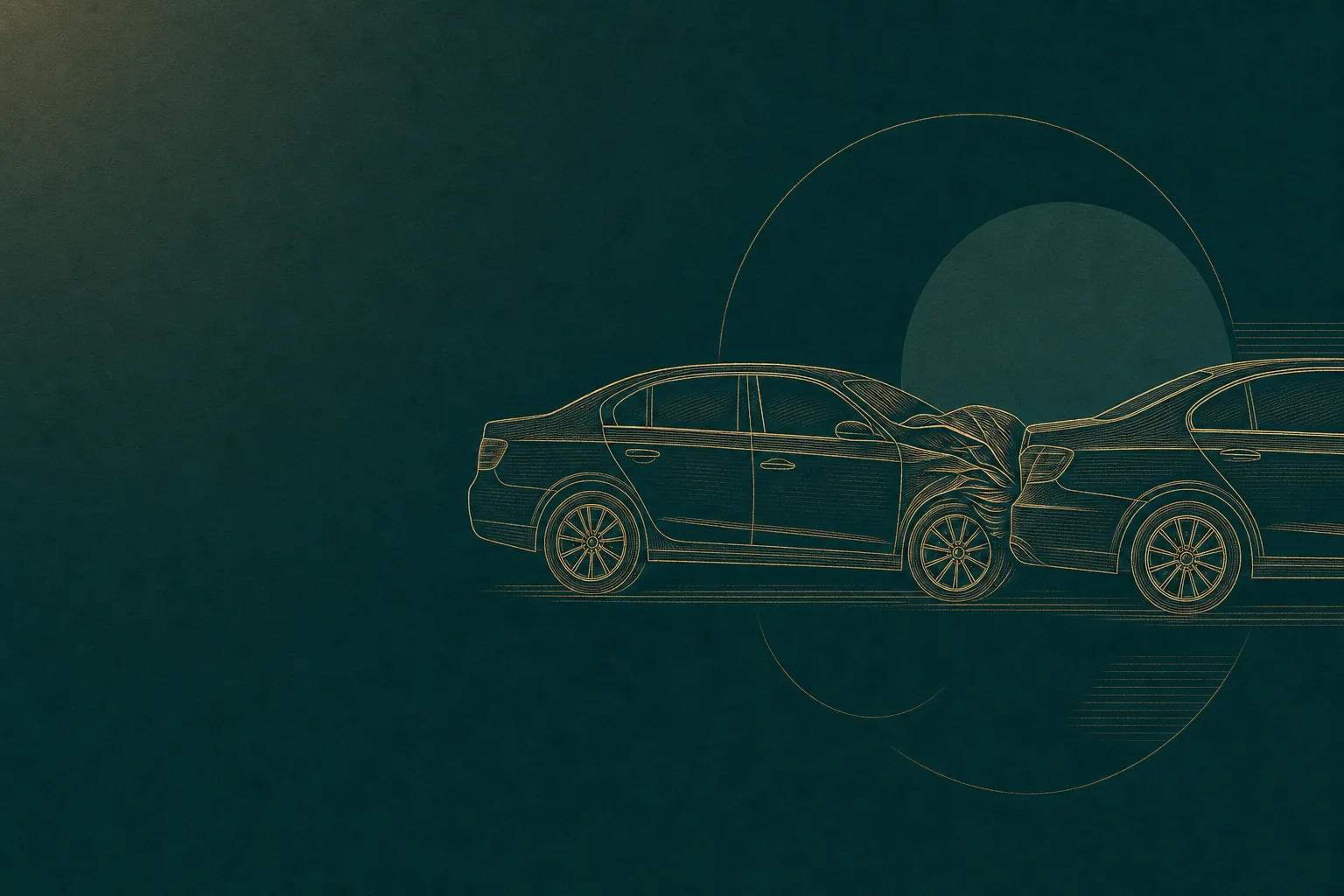
The physics are straightforward: in a rear-end collision, the struck vehicle accelerates forward while the occupant's body remains stationary for a fraction of a second. The torso is pushed forward by the seat, but the head lags behind — creating the classic whiplash mechanism that hyperextends the cervical spine. At speeds as low as 5 mph, this mechanism can herniate discs, tear ligaments, and cause concussions. The occupant had no warning, no time to brace, and their muscles were relaxed — which actually increases the severity of injury compared to impacts where the driver sees it coming.
Beyond whiplash, rear-end collisions cause lumbar disc herniations (from the compressive forces on the seated spine), traumatic brain injuries (the brain decelerates against the inside of the skull), shoulder injuries (from gripping the steering wheel at impact), and knee injuries (from contact with the dashboard or steering column). The "minor" accident narrative that insurers push is medically indefensible.
Frequently Asked Questions
Q: Is the rear driver always at fault in a rear-end collision?
In Michigan, there's a strong presumption that the rear driver is at fault — they had a duty to maintain a safe following distance under MCL § 257.627. But it's not absolute. Comparative negligence under MCL § 600.2959 means the lead driver can share fault if they brake-checked, had non-functioning brake lights, or made a sudden illegal lane change. In practice, the rear driver bears the majority of fault in most rear-end cases, and I use that presumption aggressively.
Q: The insurance company says the damage to my car was minor, so my injuries must be minor. Is that true?
No. Property damage does not correlate reliably with injury severity. Modern vehicles are engineered to absorb impact through crumple zones — the car looks fine, but the forces were transferred to the occupants. Studies consistently show that low-property-damage collisions can cause significant injuries, particularly to the cervical spine. I retain biomechanical engineers who testify to this exact point when insurers try the "minimal damage" defense.
Q: I didn't feel injured right after the crash but started having symptoms days later. Does that hurt my case?
Delayed symptom onset is medically well-documented in rear-end collisions. Adrenaline, soft tissue inflammation that builds over 24-72 hours, and the gradual onset of disc herniation symptoms all explain why you felt "fine" at the scene but couldn't turn your neck three days later. The key is seeking medical attention as soon as symptoms appear — don't wait. Documented medical treatment creates the record that connects your injuries to the crash.
Q: What is the statute of limitations for a rear-end collision claim in Michigan?
Three years from the date of the accident under MCL § 600.5805. For the third-party tort claim (pain and suffering), you must also meet Michigan's serious impairment threshold under MCL § 500.3135. PIP benefits have a one-year-back rule under MCL § 500.3145. Government entity claims require 120-day notice under MCL § 691.1404.