Dram Shop Liability
Dram Shop Liability in Michigan: Holding Bars and Restaurants Accountable for Overserving
When a drunk driver destroys your life, the bar that kept serving them after they were visibly intoxicated shares the blame — and under Michigan law, they share the financial liability. Michigan's Dram Shop Act is one of the most powerful tools in a personal injury attorney's arsenal because it adds a deep-pocket commercial defendant with substantial insurance coverage to cases where the drunk driver's personal auto policy is hopelessly inadequate.
At Koussan Law, I investigate dram shop liability in every drunk driving case I handle. The reason is simple math: a drunk driver with a $50,000 liability policy can't begin to compensate a client with a traumatic brain injury or a family that lost a parent. But the bar's commercial general liability policy — often $1 million or more — transforms the case from inadequate to adequate. Finding the establishment that overserved the driver is frequently the difference between a settlement that barely covers medical bills and one that actually provides for my client's future.
What Michigan's Dram Shop Act Requires
Under MCL § 436.1801, a licensed establishment is liable if it serves alcohol to a person who is "visibly intoxicated" and that person's intoxication is a proximate cause of injury or death. The two critical elements are visible intoxication and causation. Visible intoxication means the server or bartender could observe signs that the patron was already drunk — slurred speech, unsteady gait, bloodshot eyes, erratic behavior, spilling drinks. It's not enough that the patron was legally intoxicated (above .08 BAC); the establishment must have served them when the intoxication was apparent.
Proving visible intoxication requires investigation: subpoenaing the bar's receipts and credit card records to establish how many drinks were served, interviewing other patrons and staff, obtaining surveillance footage from the establishment, and reviewing the patron's BAC at the time of the crash (from which an expert can back-calculate their BAC at the time they were being served). A patron with a .18 BAC at the time of the crash was almost certainly visibly intoxicated while still being served at the bar — and the evidence usually proves it.
Frequently Asked Questions
Q: Does the Dram Shop Act apply to social hosts who serve alcohol at private parties?
Michigan's Dram Shop Act applies only to licensed establishments — bars, restaurants, clubs, caterers with liquor licenses. Social host liability is governed by a separate statute, MCL § 436.1801(3), which limits liability to situations where the host serves alcohol to a minor. If an adult gets drunk at a friend's house party and causes a crash, the social host is generally not liable under Michigan law (with the minor exception). This is one more reason dram shop claims against licensed establishments are so critical — they're often the only deep-pocket defendant available.
Q: What if the drunk driver went to multiple bars — which one is liable?
Potentially all of them. Each establishment that served the patron while visibly intoxicated is independently liable under the Dram Shop Act. I trace the drunk driver's entire evening through credit card records, cell phone location data, and witness interviews. If three bars served the driver over the course of an evening and the driver was visibly intoxicated at the second and third establishments, both the second and third bars are liable defendants — each with their own commercial insurance policy.
Q: What damages are available in a dram shop case?
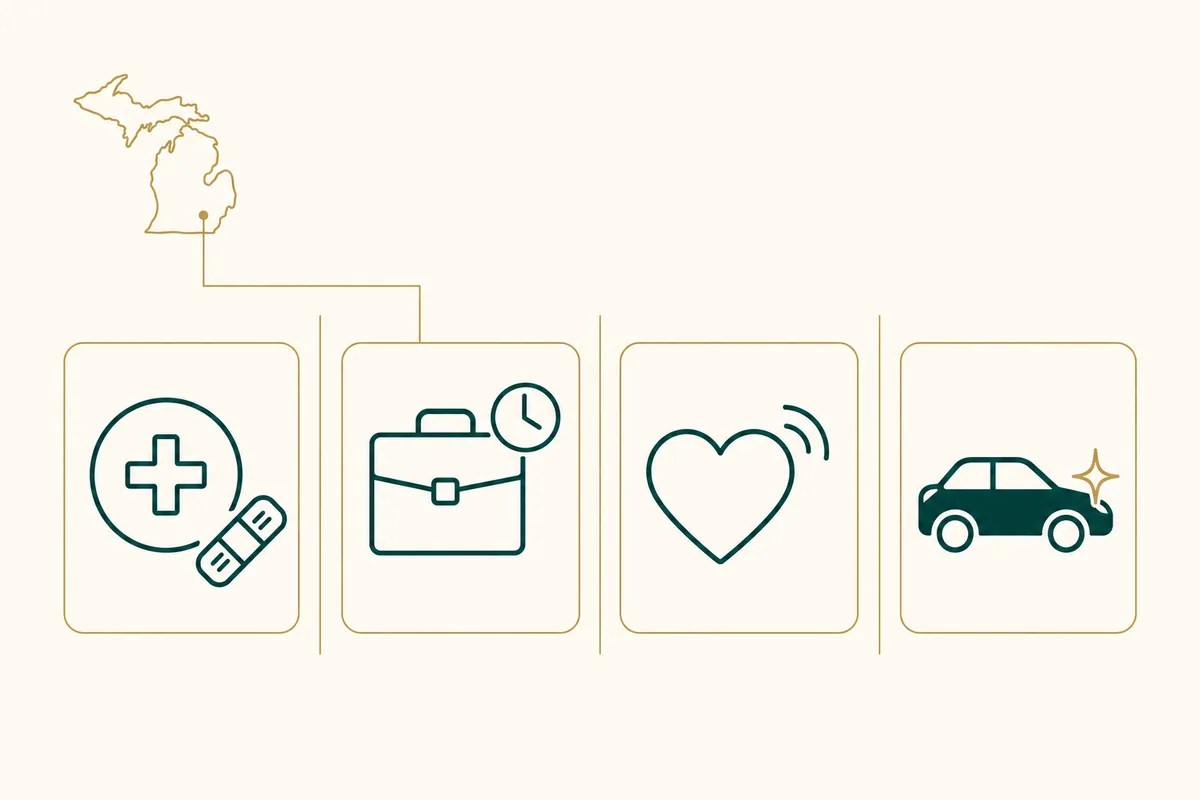
The same damages as any personal injury case: medical expenses, lost wages, loss of earning capacity, pain and suffering, emotional distress, loss of enjoyment of life, and — in cases involving death — wrongful death damages under MCL § 600.2922. The Dram Shop Act doesn't limit the type of damages; it creates an additional defendant who can be held jointly liable for the full scope of the plaintiff's damages.
Q: What is the statute of limitations for a dram shop claim in Michigan?
Two years from the date of the incident under MCL § 436.1801(4) — which is one year shorter than the standard three-year personal injury statute. Additionally, within 120 days of the incident, you must serve a written notice on the establishment identifying the date, time, and person served. Missing either the 120-day notice or the two-year filing deadline extinguishes the dram shop claim entirely. This shorter deadline is the single most important reason to contact an attorney immediately after a drunk driving accident.