Head-On Collision Accidents
Head-On Collisions: The Most Deadly Crash Type on Michigan Roads
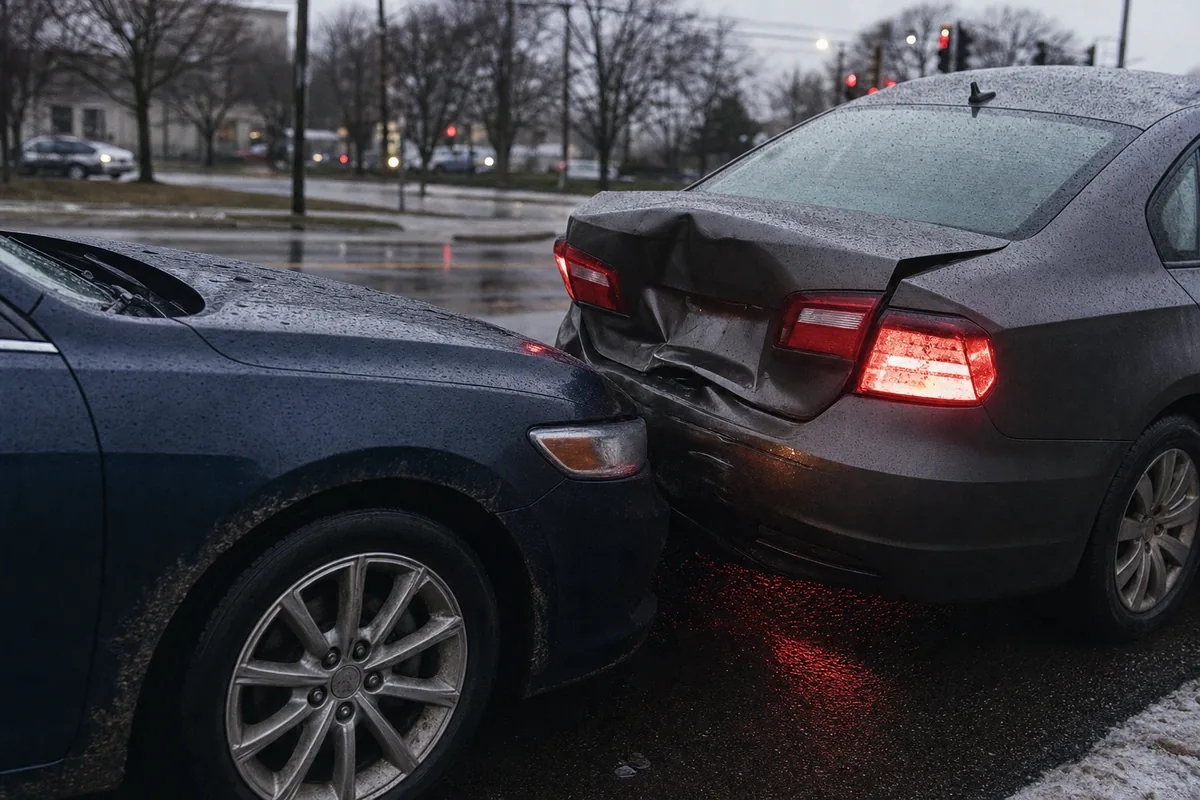
Head-on collisions account for only about 2% of all crashes but cause a wildly disproportionate share of traffic fatalities. The reason is physics: when two vehicles traveling in opposite directions collide, the combined closing speed can exceed 100 mph even if both vehicles were only doing 50. The energy involved is catastrophic. Occupants face forces that overwhelm every safety system in the vehicle — airbags, seatbelts, crumple zones — all designed for survivability thresholds that a head-on collision at highway speed exceeds.
At Koussan Law, I represent survivors of head-on collisions and the families of those who didn't survive. These cases almost always involve catastrophic injuries — traumatic brain injuries, spinal cord damage, multiple fractures, internal organ damage, crush injuries requiring amputation. When a client survives a head-on collision, the fight for adequate compensation is enormous because the medical costs are enormous, the disability is often permanent, and the at-fault driver's insurance rarely carries enough coverage to address the actual losses.
Common Causes of Head-On Collisions
Distracted driving is the leading cause — a driver drifts across the center line while looking at a phone. Impaired driving follows closely, with drunk and drugged drivers crossing into oncoming traffic. Drowsy driving produces the same drift pattern — the driver falls asleep and wakes up in the oncoming lane. Wrong-way driving on divided highways, often by impaired or elderly drivers, causes some of the most catastrophic head-on crashes. Improper passing on two-lane roads — attempting to pass when oncoming traffic is approaching — rounds out the major causes. Each cause points to a specific form of negligence that I prove through evidence including phone records, toxicology results, EDR data, and witness testimony.
The Multi-Defendant Strategy
In head-on collision cases, the at-fault driver's liability insurance often falls far short of the victim's actual damages. A driver with Michigan's minimum $50,000/$100,000 liability coverage has nowhere near enough to cover a $2 million traumatic brain injury or a wrongful death with four dependents. I pursue every available source of recovery: the at-fault driver's liability policy, the victim's UM/UIM coverage, dram shop claims if the driver was intoxicated and overserved, employer liability if the driver was on the clock, vehicle defect claims if a mechanical failure contributed, and government entity claims if road design or signage deficiencies played a role.
Frequently Asked Questions
Q: What injuries are most common in head-on collisions?
The most common injuries I see: traumatic brain injuries (from the rapid deceleration of the brain inside the skull), cervical and thoracic spinal injuries (from the extreme forces on the spine), facial fractures and lacerations (from airbag deployment and flying debris), chest injuries including fractured sternum and rib fractures (from seatbelt loading), internal organ damage (liver and spleen lacerations from seatbelt forces), lower extremity fractures (from pedal and dashboard intrusion), and crush injuries to the feet and ankles. Many head-on collision survivors face multiple simultaneous injuries requiring coordinated treatment across surgical specialties.
Q: What if the head-on collision killed my family member?
Michigan's Wrongful Death Act — MCL § 600.2922 — allows the personal representative of the deceased's estate to bring a claim for the full range of damages: medical expenses incurred before death, funeral and burial costs, loss of financial support, loss of companionship and society, and pain and suffering experienced between the crash and death. I work with the family to identify the right personal representative and pursue maximum recovery on behalf of all beneficiaries.
Q: The at-fault driver only has minimum coverage. Can I still recover adequate compensation?
This is exactly where multi-defendant strategy matters. Your UM/UIM coverage fills the gap between the at-fault driver's limits and your actual damages — up to your own policy limits. If the driver was intoxicated, dram shop claims against the serving establishment add their commercial insurance. If road design contributed, the government entity responsible for the road may be liable (subject to the 120-day notice requirement). I map every possible defendant and every available insurance policy before settling any claim.
Q: What is the statute of limitations for a head-on collision claim?
Three years from the date of the accident under MCL § 600.5805. Wrongful death claims also have a three-year deadline under MCL § 600.2922. Dram shop claims have a two-year deadline under MCL § 436.1801. Government entity claims require 120-day notice under MCL § 691.1404. PIP benefits have a one-year-back rule under MCL § 500.3145. Multiple deadlines running simultaneously means early attorney involvement is critical.