The Three Categories of Damages in Michigan
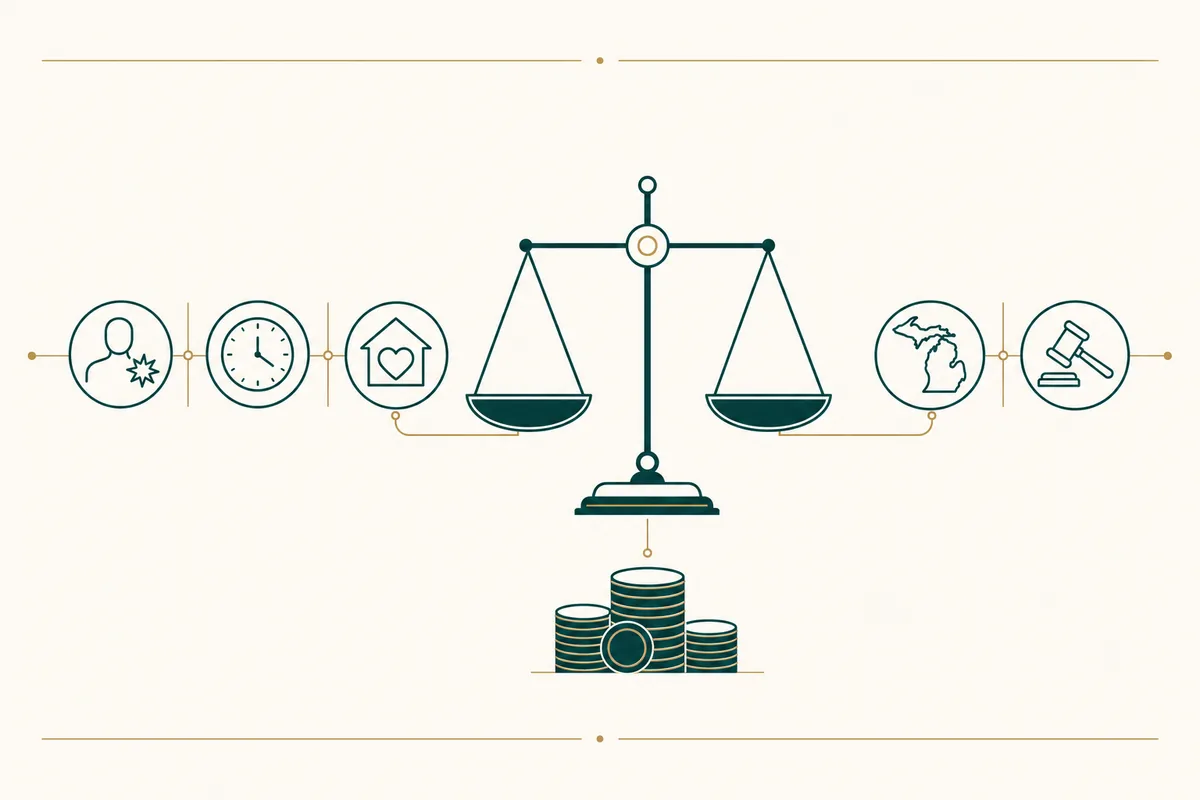
When people ask "how much is my case worth," what they are really asking is what damages they can recover. Michigan law divides personal injury damages into three categories, and understanding them is essential to evaluating your case realistically.
Economic Damages: The Calculable Losses
Economic damages are the losses you can attach a dollar figure to with documentation. They include past medical expenses (everything from the ambulance ride to surgery to physical therapy), future medical expenses (projected costs of ongoing treatment, future surgeries, medications, and assistive devices), lost wages (income you missed because you could not work), lost earning capacity (the difference between what you would have earned over your career and what you can earn now given your injuries), property damage (vehicle repair or replacement), and out-of-pocket costs (transportation to medical appointments, home modifications, household help you had to hire). Economic damages have no cap in Michigan personal injury cases — you recover the actual documented amount.
Non-Economic Damages: The Human Cost
Non-economic damages compensate for losses that are real but cannot be precisely calculated with a receipt. They include pain and suffering (both physical pain and emotional anguish), loss of enjoyment of life (activities and pleasures you can no longer participate in), loss of consortium (the impact on your relationship with your spouse), emotional distress (anxiety, depression, PTSD, fear), disfigurement and scarring, and loss of independence. In most Michigan personal injury cases, non-economic damages are uncapped. The exception is medical malpractice, where Michigan imposes statutory caps under MCL § 600.1483.
Punitive Damages: Punishment for Extreme Conduct
Michigan is generally conservative about punitive damages, but they are available in cases involving willful and wanton misconduct or gross negligence. Drunk driving accidents, intentional assaults, and cases where a defendant consciously disregarded a known risk can support punitive damage claims. These damages go beyond compensating you — they are designed to punish the defendant and deter similar conduct. Michigan does not have a statutory cap on punitive damages in most contexts.
Michigan's Serious Impairment Threshold
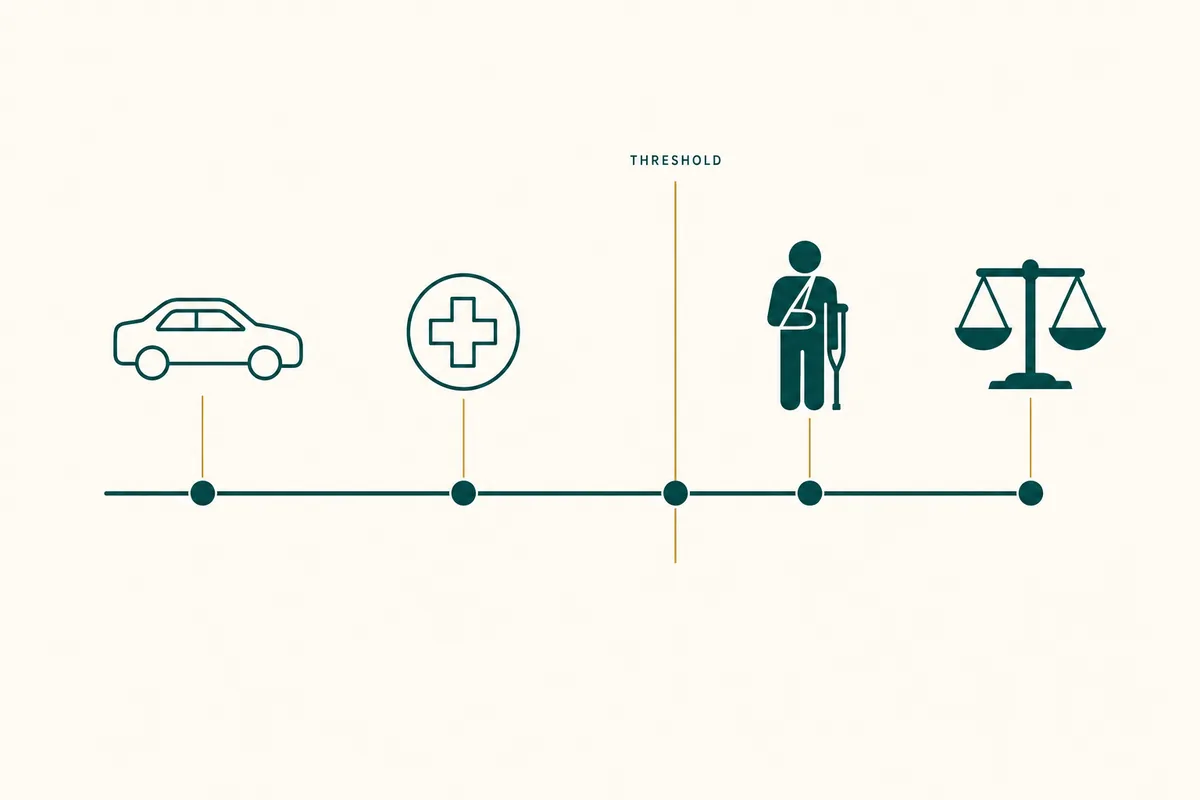
For auto accident cases specifically, Michigan requires that your injuries meet the serious impairment of body function threshold under MCL § 500.3135 before you can recover non-economic damages from the at-fault driver. The injury must be objectively manifested, affect an important body function, and impact your general ability to lead your normal life. Broken bones requiring surgery, herniated discs, traumatic brain injuries, and any injury causing permanent impairment typically meet this standard. Soft tissue injuries with full recovery often do not. Koussan Law evaluates every case against this threshold before advising clients on their options.
Why Documentation Is Everything
The difference between a $100,000 settlement and a $1,000,000 settlement is often not the severity of the injury — it is the quality of the documentation. Medical records, imaging studies, expert opinions, wage verification, tax returns, life care plans, and vocational assessments all build the foundation of your damages claim. Insurance companies pay for what you can prove. Koussan Law documents every element of every client's damages meticulously because we know it directly determines the outcome.
For a free evaluation of the damages in your Michigan personal injury case, call Koussan Law at (313) 800-0000.
Related Practice Areas
Think you may have a case? Use our free Case Calculator to estimate your claim value, or call (313) 800-0000 for a free consultation.