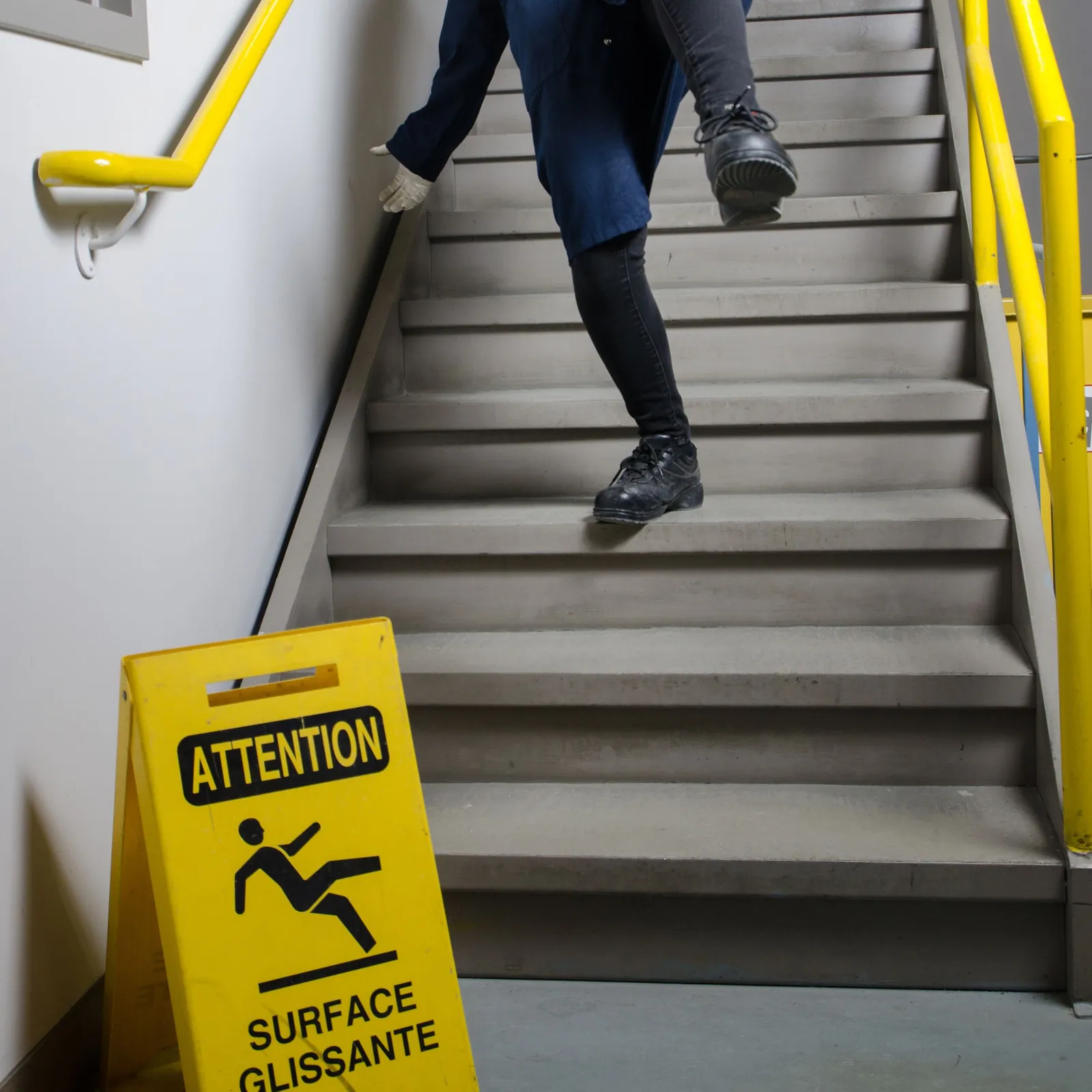
Slip and Fall
Filing a Slip and Fall Lawsuit in Michigan: What Changed in 2023
Short answer: Michigan slip and fall law changed on July 28, 2023, when Kandil-Elsayed v. F&E Oil, Inc., 512 Mich 95 (2023), overruled Lugo and ended the open and obvious doctrine as an automatic bar. A hazard you could have seen is now one factor in comparative fault for a jury to weigh, not a reason to dismiss the case. Most Michigan slip and fall claims settle for tens of thousands of dollars; results in the millions, like the $6,000,000 settlement Koussan Law secured, turn on catastrophic injury, clear liability and evidence preserved early.
If you are searching for a Michigan slip and fall lawsuit attorney, the most important thing to understand is that the law changed dramatically on July 28, 2023. In Kandil-Elsayed v. F&E Oil, Inc., 512 Mich 95 (2023), the Michigan Supreme Court overruled Lugo v. Ameritech Corp. and dismantled the "open and obvious" doctrine as an automatic bar to slip and fall claims. For two decades before that ruling, visible hazards meant your case died at summary judgment. After Kandil-Elsayed, the visibility of a hazard is one factor in comparative fault, a jury question, not a basis for dismissal. The shift is the most significant change in Michigan premises liability in a generation, and it is the reason cases that other firms reject as "open and obvious" are now winnable.
Koussan Law secured a $6,000,000 slip and fall settlement, one of the largest recorded in Michigan history. The discipline that produces that result applies to every premises case we accept, whether the fall was on ice in a Meijer parking lot, on a wet floor in a hotel lobby, on a broken stair in an apartment building, or on a sidewalk a city failed to maintain.
Slip and Fall Cases Are Not Frivolous. They're How Michigan Law Holds Property Owners Accountable.
There's a stigma around slip and fall cases that I've spent my career pushing back against. People assume these claims are exaggerated or minor. But I've represented clients who slipped on an unmarked wet floor and shattered their hip. Clients who tripped on a broken sidewalk and suffered traumatic brain injuries. A grandmother who fell on black ice in a parking lot that the property management company hadn't salted in three days. We secured a $6,000,000 settlement in a slip and fall case, because when a property owner's negligence destroys someone's quality of life, the law doesn't treat it as trivial.
What Michigan Law Requires of Property Owners
Michigan premises liability law imposes different duties depending on why you were on the property. If you were an invitee, a customer in a store, a patient in a medical office, a guest in a hotel, the property owner owes you the highest duty of care. Under MCL § 600.2921 and Michigan common law, they must inspect the premises for hazards, repair dangerous conditions, and warn you of any risks they know about or should have discovered through reasonable inspection.
If you were a licensee, a social guest, for example, the owner must warn you of known hidden dangers but doesn't have the same inspection duty. Trespassers get the least protection, though Michigan still prohibits willful or wanton injury even to trespassers. The classification of your status on the property is often the first thing insurance companies attack, and it's something I address head-on in every premises case.
The "Open and Obvious" Defense After Kandil-Elsayed (2023)
If you've talked to another attorney about a slip and fall case before mid-2023 and been told your case was weak, the analysis you received is outdated. The Michigan Supreme Court's Kandil-Elsayed decision fundamentally changed how Michigan courts handle visible hazards. A property owner can no longer get the case thrown out at summary judgment simply by arguing the ice or wet floor was visible. Instead, the visibility of the hazard is now weighed by the jury as part of comparative fault analysis under MCL § 600.2959. Your recovery is reduced by your percentage of fault, but the case proceeds.
If your fall happened before July 28, 2023, do not assume you are locked into the old rule. Kandil-Elsayed is the framework Michigan courts apply to these claims now, and how it reaches a fall that predates the decision is a fact-specific question that turns on the posture of your particular case. That is worth talking through with a lawyer rather than conceding. We have won cases that other firms rejected because the analysis is more nuanced than most attorneys realize.
Do You Have a Slip and Fall Case in Michigan? The Four Things You Must Prove
Not every fall is a case. A Michigan slip and fall case exists only when a property owner's failure to maintain safe conditions caused your injury. To win, four elements must line up:
- Duty. The property owner owed you a duty of care. The level of that duty depends on your status (invitee, licensee, or trespasser), with invitees such as customers, tenants, and hotel guests owed the highest duty.
- Breach and notice. The owner created the hazard, knew about it, or should have discovered it through reasonable inspection and then failed to fix it or warn you. "Notice" is the battleground in most cases: how long was the spill, the ice, or the broken stair there, and should the owner have caught it?
- Causation. The hazard, and not something unrelated, caused your fall and your injury. This is why same-day medical documentation matters so much.
- Damages. You suffered real harm: medical bills, lost wages, pain and suffering, or permanent injury.
After Kandil-Elsayed, the fact that a hazard was visible no longer kills the case at the courthouse door; it is folded into the comparative-fault analysis a jury weighs. That single change is why many "you don't have a case" rejections from before mid-2023 were wrong, and why a second opinion is worth getting.
Frequently Asked Questions
Q: How long do I have to file a slip and fall lawsuit in Michigan?
Three years from the date of your fall under MCL § 600.5805. But if the property owner is a government entity, a city, county, school district, or state agency, you must file a written notice within 120 days of the incident under MCL § 691.1404. I've seen people lose otherwise strong claims because they didn't know about the government notice requirement. If you fell on government property, time is not on your side.
Q: What if I was partially at fault for my fall?
Michigan's modified comparative fault rule under MCL § 600.2959 allows you to recover as long as you were not more than 50% at fault. Your damages are reduced by your percentage of responsibility, and even past that line economic damages such as medical bills and lost wages remain recoverable; only pain-and-suffering damages are barred. Insurance adjusters will try to argue you weren't paying attention, were wearing inappropriate footwear, or should have seen the hazard. I push back on every one of those arguments with evidence of the property owner's failure to maintain safe conditions.
Q: What compensation can I recover in a Michigan slip and fall case?
Economic damages include medical expenses, lost wages, future treatment costs, and rehabilitation. Non-economic damages cover pain and suffering, emotional distress, and loss of enjoyment of life. Michigan does not cap non-economic damages in premises liability cases. The severity of your injury, hip fractures, back injuries, traumatic brain injuries, knee damage, directly drives the value of your claim. Documentation is everything: I tell every client to photograph the hazard, get the incident report, and keep every medical record.
Q: How do slip and fall settlements work in Michigan?
Most slip and fall cases resolve through a settlement with the property owner's liability insurer rather than at trial. The settlement reflects your medical bills and lost wages, the strength of the liability evidence (notice, surveillance video, the incident report), the severity and permanence of your injury, and the available insurance limits. Serious-injury cases with clear negligence and solid documentation settle for far more than the quick, lowball offers carriers make in the first weeks. We do not let clients accept an early settlement before the full extent of the injury is known.
Q: Does the property owner's insurance company have to pay?
Property owners carry commercial general liability insurance for exactly this reason. But their insurer's job is to minimize the payout. They'll send an adjuster, take your recorded statement, and offer a lowball settlement before you understand the full extent of your injuries. I handle cases on contingency, you pay nothing unless we recover, and I don't let clients accept early settlements that undervalue their claim.
Slip and Fall Lawsuit Settlement Values in Michigan
Settlement and verdict ranges in Michigan slip and fall cases depend on the severity of injury, evidence of negligence, and the property owner's insurance coverage. Typical ranges:
- Soft tissue injuries (sprains, contusions) with full recovery: $10,000 to $50,000. These are the most common cases. Insurance carriers settle them quickly to avoid litigation costs.
- Fractures requiring surgery (wrist, ankle, tibial plateau) with good outcome: $75,000 to $300,000. Surgery cost, recovery time, and lost wages drive the value.
- Hip fractures, particularly in older clients: $200,000 to $1,500,000. Hip fractures in adults over 65 carry a one-year mortality rate of 20 to 30 percent. Cases involving permanent mobility limitation or accelerated decline settle at the upper end.
- Traumatic brain injuries: $300,000 to $5,000,000+. TBI cases require neuropsychological testing, vocational expert testimony, and life-care planning. Permanent cognitive impairment dramatically increases case value.
- Spinal cord injuries causing paralysis or chronic neurological deficits: $1,000,000 to $10,000,000+. The most severe slip and fall cases.
- Wrongful death from a fall: $500,000 to $3,000,000+ under MCL § 600.2922, depending on the deceased's age, family circumstances, and conscious suffering before death.
Koussan Law's $6 million slip and fall settlement sits in the upper tier and reflects the kind of investigation, expert witness work, and litigation discipline required to maximize recovery in serious cases. Most cases do not settle at that level, but cases with serious permanent injuries, clear duty breach, and well-documented damages routinely produce six- and seven-figure recoveries when the firm invests in the work.
For the full Michigan personal injury case-value framework, see Average Settlement Amounts in Michigan and our free case value calculator.
What to Do in the First 48 Hours After a Slip and Fall
The actions you take in the first 48 hours after a fall on someone else's property determine whether you have a winnable case or a dead one. Five priorities:
- Photograph the hazard before it disappears. Wet floors get mopped. Ice gets salted. Loose floor tiles get fixed. Use your phone before you leave the property. Wide shots, close shots, photos showing the absence of warning signs.
- Get medical care the same day. Adrenaline masks pain. A documented ER or urgent care visit on the day of the fall is foundational evidence. A two-week delay between the fall and the first medical visit is one of the most common reasons claims fail.
- Get the incident report. Most commercial properties require staff to document falls. Ask for a copy. Get names and contact info of witnesses. If the property refuses to provide a report, document the refusal in writing.
- Preserve your clothing and shoes. The shoes you were wearing and any clothing that came in contact with the hazard are evidence. Don't wash them. Don't throw them away.
- If the property is government-owned, contact counsel within weeks. The 120-day notice deadline runs whether you know about it or not. A government-property claim filed at month four is a barred claim, no matter how strong the underlying facts.
For our complete guide to winter falls specifically, see Snow and Ice Slip and Fall in Michigan.
How Koussan Law Handles Michigan Slip and Fall Cases
We accept Michigan slip and fall claims on contingency. You pay nothing unless we recover. We front the cost of investigation, expert witnesses, weather-data analysis when relevant, building-condition inspection, medical records, and litigation. Our experience in this practice area includes the $6 million slip-and-fall settlement and substantial traumatic brain injury settlements arising from stairwell falls in Detroit apartment buildings. The discipline that produces those results is the same discipline we apply to a parking-lot ice fall when the insurance carrier has already taken the position the case is worth nothing.
If you have been hurt in a slip and fall on someone else's property anywhere in Michigan, contact us for a free consultation. Call (313) 800-0000, request a consultation online, or use our free case calculator. We will review the facts and tell you, honestly, whether we think the case has merit, at no cost.