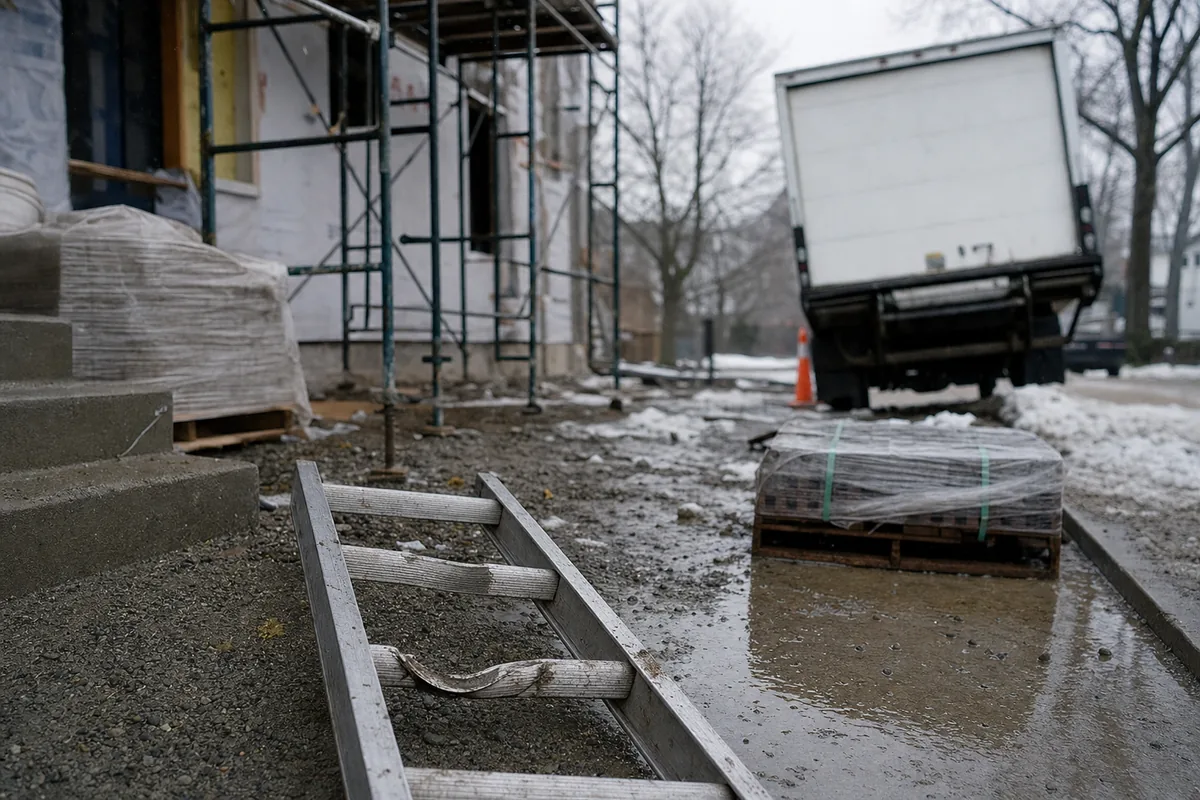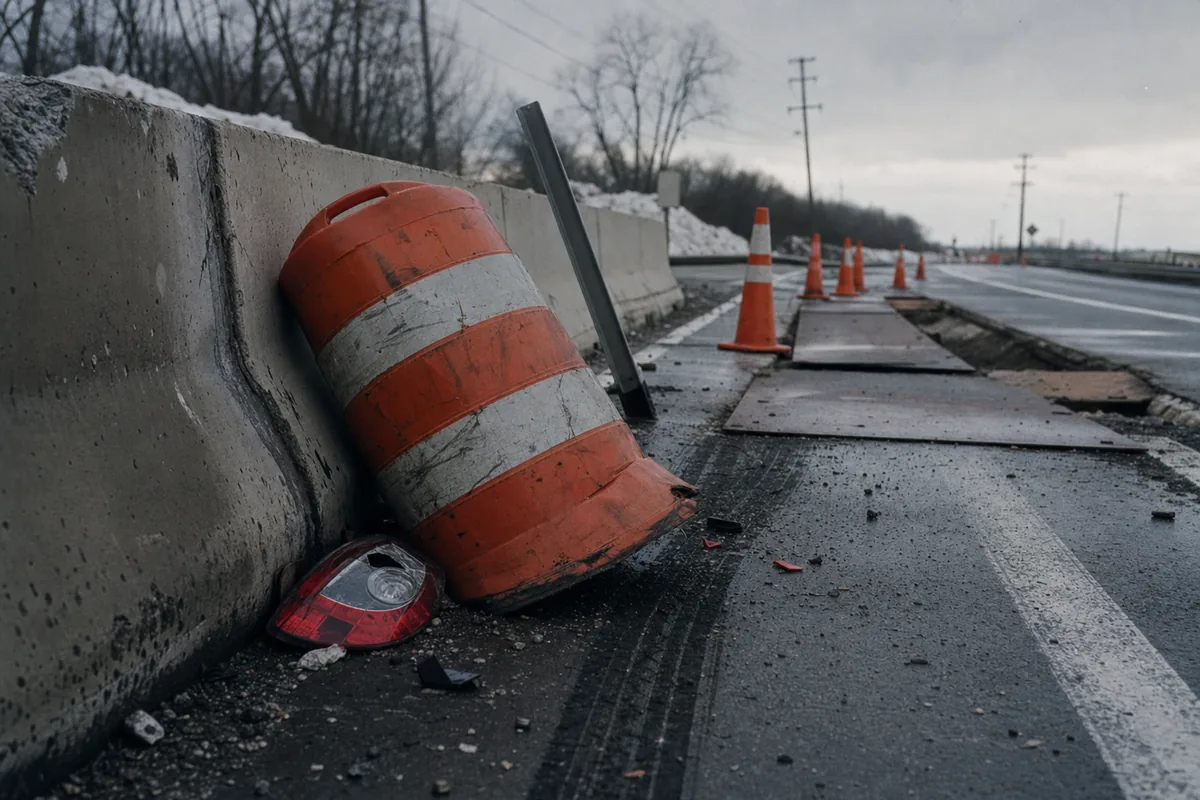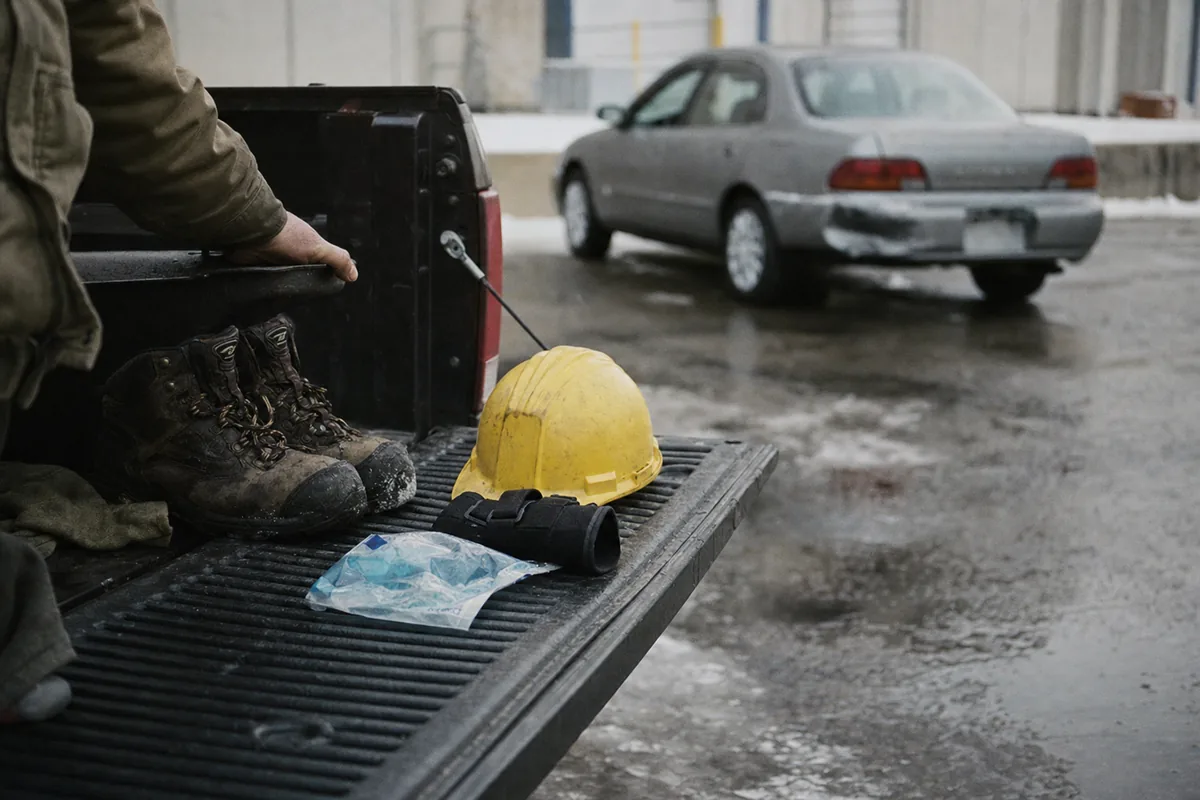
Detroit is in the middle of a construction boom. General Motors moved into its new headquarters at Hudson's Detroit in early 2026, the $1.5 billion District Detroit development is breaking ground on new residential towers, the Gordie Howe International Bridge is nearing completion, and Wayne County's 2026 road season has crews working I-94, Michigan Avenue, and dozens of other corridors. More construction means more workers exposed to one of the most dangerous job environments in the state.
If you were hurt on a Detroit jobsite, you have probably been told that workers' compensation is your only option. That is often wrong. For many injured construction workers, workers' comp is just the starting point — and the larger recovery comes from a separate third-party liability claim. This guide explains how that works under Michigan law.
Workers' compensation: what it gives you, and what it does not
If you are an employee, Michigan's Worker's Disability Compensation Act entitles you to benefits regardless of fault: medical treatment, wage-loss benefits, and vocational rehabilitation. The tradeoff is the exclusive-remedy rule in MCL 418.131 — in exchange for no-fault benefits, you generally cannot sue your own employer for negligence.
But workers' comp has a hard ceiling. It pays a percentage of your lost wages, not the full amount. It pays nothing for pain and suffering, nothing for the loss of a normal life, and nothing for the human cost of a permanent disability. On a serious injury, those uncompensated losses can dwarf what comp ever pays. That gap is exactly what a third-party claim is designed to fill.
The third-party claim: the part most workers never hear about
The exclusive-remedy rule only protects your employer. It does not protect anyone else whose negligence contributed to your injury. On a typical Detroit construction site, that can include a general contractor, the property owner, other subcontractors, equipment manufacturers, or a negligent driver in a work zone. A claim against any of those parties is a third-party negligence claim, and it is not limited the way workers' comp is — it can recover full wage loss, full medical costs, and pain and suffering.
This is the single most important thing for an injured Detroit construction worker to understand: you can collect workers' comp from your employer and pursue a third-party lawsuit against others at the same time. They are separate tracks.
Michigan's common work area doctrine
General contractors often argue they are not responsible for the safety practices of subcontractors. Michigan law says otherwise in specific circumstances. Under the common work area doctrine — established in Funk v. General Motors Corp. and refined in Ormsby v. Capital Welding, Inc. — a general contractor can be liable for jobsite hazards when an injured worker proves all four elements:
- The contractor failed to take reasonable steps to guard against readily observable and avoidable dangers;
- The danger created a high degree of risk to a significant number of workers;
- The hazard existed in a common work area — a place where workers of multiple trades pass through or work; and
- The contractor had actual or constructive notice of the hazard.
This doctrine is why an experienced lawyer does not stop at the workers' comp claim. Identifying who controlled the common work area — and proving notice — is frequently where the real recovery lives.
The hazards behind most serious Detroit jobsite injuries
OSHA's "Fatal Four" account for the majority of construction deaths nationwide, and they drive the most severe injuries on Detroit sites as well:
- Falls — from scaffolds, roofs, ladders, and unguarded edges (OSHA fall-protection standard, 29 CFR 1926.501);
- Struck-by — falling tools or materials, swinging loads, and vehicle strikes in work zones;
- Caught-in/between — trench collapses (29 CFR 1926.651) and unguarded machinery;
- Electrocution — contact with live wires and overhead power lines.
Each of these often traces back to a safety failure by someone other than the injured worker's direct employer — which is precisely what opens the third-party door.
Deadlines: do not let the clock run out
Michigan's statute of limitations for most personal injury claims is three years from the date of injury (MCL 600.5805). Miss it and the third-party claim is gone, no matter how strong. Workers' comp has its own, shorter notice and claim deadlines. Evidence on a construction site also disappears fast — conditions change, equipment is moved, and witnesses move between jobs. The sooner the scene is investigated, the stronger the case.
One more wrinkle: if your employer's comp insurer pays benefits and you later recover from a third party, the insurer may assert a lien to be reimbursed out of your recovery (MCL 418.827). How that lien is negotiated has a major effect on what you actually keep — another reason to have a lawyer coordinating both claims from the start.
What a construction accident lawyer actually does
Building one of these cases means moving quickly and on several fronts: securing the scene and preserving evidence, identifying every potentially liable party beyond the employer, obtaining OSHA citations and inspection records, working with engineering and safety experts, documenting the full medical and economic impact, and negotiating the comp lien so the third-party recovery is not eaten up by reimbursement. Done right, it is the difference between a capped comp benefit and full compensation.
Talk to a Detroit construction accident lawyer
If you or a family member was hurt on a construction site anywhere in metro Detroit, find out whether you have a third-party claim before the evidence and the deadlines slip away. Koussan Law handles construction site accident cases across Michigan and offers a free, no-obligation consultation. You pay nothing unless we recover for you.
This article is for general information and is not legal advice. Every case is different; consult a licensed Michigan attorney about your specific situation. Prior results do not guarantee a similar outcome.
Our construction accident attorney team handles third-party jobsite claims across Michigan.