Short answer: Michigan's "mini tort" is a narrow exception to no-fault law, codified at MCL § 500.3135(3)(e), that allows the owner of a damaged vehicle to recover up to $3,000 from the at-fault driver for vehicle damage not paid by insurance. Mini tort claims are typically filed in district court small claims division. The deadline is three years from the date of the crash under MCL § 600.5805. The at-fault driver pays personally unless their auto policy includes mini tort coverage — a low-cost optional rider most Michigan drivers carry. This guide explains who qualifies, how to file, the practical steps for a successful claim, and the deadlines that catch unprepared claimants off guard.
Last updated 2026-05-23 by Ali H. Koussan, Founding Attorney at Koussan Law. Mini tort claims are typically small enough that they do not require an attorney, but the procedural details matter. This guide is for Michigan drivers who want to recover their out-of-pocket vehicle damage after a crash where they were not at fault.
The Problem Michigan Mini Tort Solves
Michigan has been a no-fault insurance state since 1973. Under no-fault, your own insurance company pays your medical bills and lost wages after a car accident regardless of who caused the crash. This system was designed to reduce litigation and pay benefits faster than the traditional fault-based model.
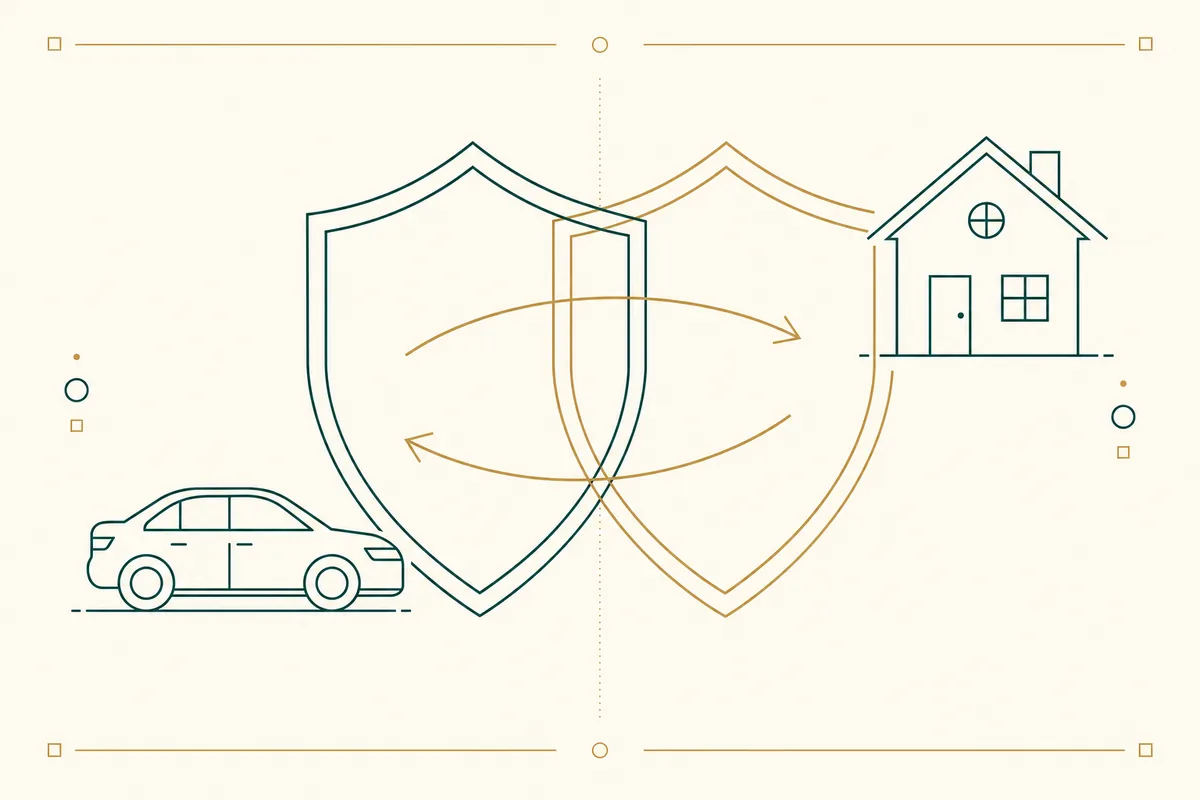
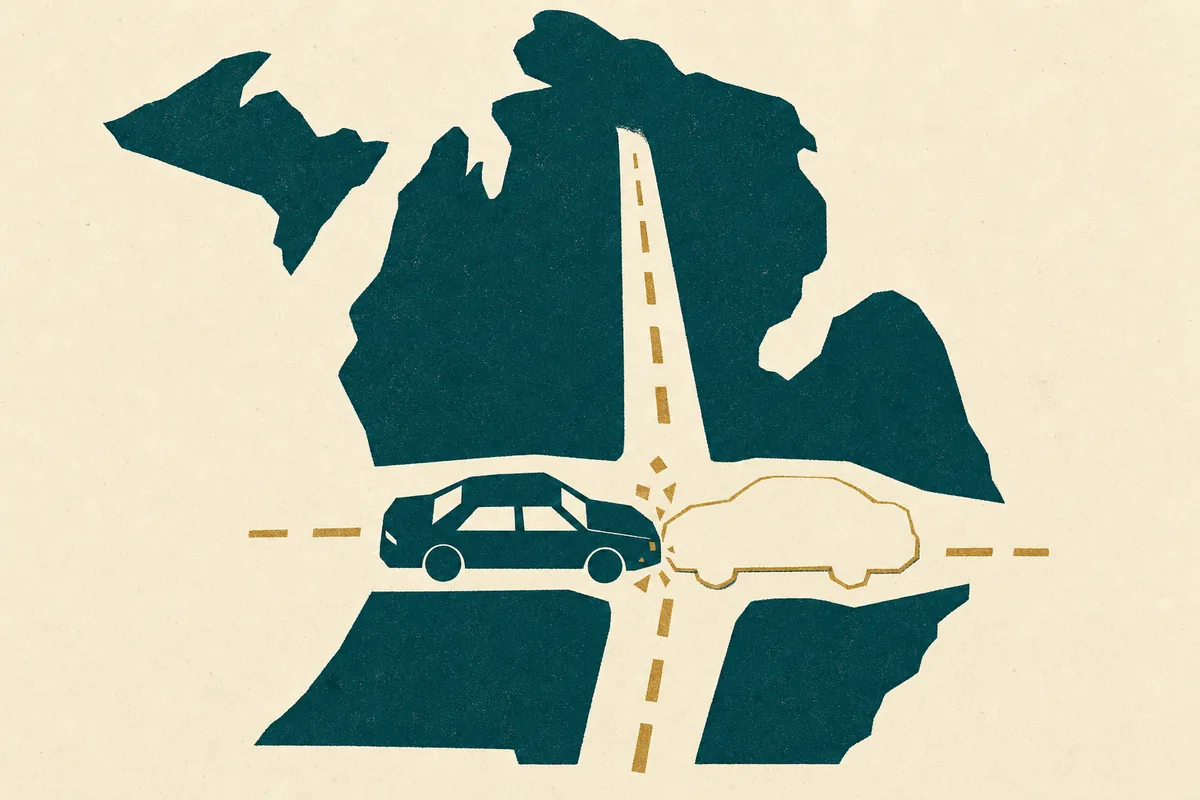
But no-fault has a side effect: it largely abolishes lawsuits against at-fault drivers for vehicle damage. Under MCL § 500.3135(3), an at-fault driver is generally immune from civil liability for vehicle damage — unless you fit into one of the narrow exceptions listed in the lettered paragraphs that follow. The most important of these for vehicle damage is the mini tort exception at MCL § 500.3135(3)(e), which restores your right to sue for a limited dollar amount.
Why does this matter? Because most Michigan drivers carry collision insurance with a deductible. After a crash that wasn't your fault, your insurance pays the repair cost minus the deductible — usually $500 or $1,000 — and you eat the difference. The mini tort claim is how you recover that deductible (and additional uninsured damage) from the actual at-fault driver. Without the mini tort, no-fault would have you bearing the financial consequence of someone else's negligence.
The Statute: MCL § 500.3135(3)(e)
The mini tort exception is codified at MCL § 500.3135(3)(e). The statute provides that, notwithstanding the general no-fault tort abolition, an at-fault driver remains liable for damage to a vehicle up to $3,000 if certain conditions are met.
The cap is currently $3,000 — increased from $1,000 by a 2019 amendment that took effect July 2, 2020. Older articles still online reference the $1,000 limit; that information is outdated. Verify the current cap with the Michigan Department of Insurance and Financial Services before filing.
Who Can File a Mini Tort Claim?
To recover under Michigan's mini tort, you must establish three things:
- You were not more than 50 percent at fault for the crash. Comparative fault applies. If you and the other driver share blame, your recovery is reduced by your percentage of fault. If you are more than 50 percent at fault, recovery is barred entirely.
- The vehicle damage is not paid in full by your own insurance. The mini tort covers your deductible, depreciation/diminished value not covered by collision insurance, and other reasonable out-of-pocket vehicle damage costs. It does not duplicate insurance payments.
- Your own vehicle was properly insured under Michigan law at the time of the crash. Drivers without no-fault coverage cannot use the mini tort exception. This is a key gatekeeping requirement.
The third requirement is strict. Michigan law (MCL § 500.3101) requires registered vehicles operated on public roads to carry no-fault insurance. Driving without no-fault coverage doesn't just expose you to fines and license suspension — it also forfeits the right to pursue a mini tort claim, even if you were not at fault for the crash.
What the Mini Tort Covers (and What It Doesn't)
The mini tort is exclusively for vehicle damage. It does not cover:
- Medical expenses. Those are covered by no-fault PIP under MCL § 500.3105, regardless of fault.
- Lost wages. Also a PIP benefit.
- Pain and suffering. Available only through a separate third-party liability claim if the injury meets the no-fault threshold of "serious impairment of body function" under MCL § 500.3135(1).
- Personal property inside the vehicle. Personal items in your trunk or passenger compartment may be covered by your homeowners or renters insurance but are not a mini tort item. Some Michigan courts have allowed recovery for personal property in the vehicle under mini tort theory, but the law on this is unsettled — don't count on it.
- Loss of use of the vehicle. Rental car coverage during repair is generally a collision insurance benefit if you carry rental reimbursement.
- Mileage to and from the body shop. Not generally recoverable.
What the mini tort does cover:
- Your collision deductible. The single most common mini tort claim.
- Repair costs not paid by your collision insurance when you don't carry collision (a real risk on older vehicles where collision coverage is uneconomical).
- Diminished value — the loss in your vehicle's resale value after the repair. Diminished value claims are notoriously difficult to prove but are technically within the mini tort's scope. A professional diminished value appraisal is typically required.
- Total loss gap — the difference between your insurance payout (actual cash value) and what you owed on the loan. Generally not covered by mini tort, but consult counsel on specific facts.
How to Determine Fault for Mini Tort Purposes
The fault analysis for mini tort is the same as in any negligence case. Michigan applies a modified comparative fault rule: your recovery is reduced by your percentage of fault, and you are barred entirely if you are more than 50 percent at fault (MCL § 600.2959).
Common scenarios:
- Rear-end collision. The rear driver is almost always at fault under the Michigan presumption that the trailing driver must maintain a safe following distance. Mini tort recovery is generally clean.
- Left-turn collision. The left-turning driver is at fault if the oncoming driver had the right of way. Slightly more complex if the oncoming driver was speeding or otherwise contributing.
- Parking lot collision. Both drivers may share fault. Document the angle of impact, the painted lines, and the direction each car was traveling.
- Lane-change collision. The lane-changing driver is at fault if the other vehicle was already established in the lane.
Police reports help establish fault but are not conclusive. The investigating officer's opinion as to fault is hearsay; the actual proof comes from photographs, witness statements, the physical damage pattern, and the testimony of the drivers.
How to File a Mini Tort Claim in Michigan
Mini tort claims are typically filed in small claims division of district court. The procedure is designed to be navigable without an attorney for amounts up to $7,000 (the small claims jurisdictional limit in Michigan).
The step-by-step process:
- Send a demand letter to the at-fault driver. Many at-fault drivers will pay a documented mini tort claim without litigation, particularly if their insurance covers mini tort exposure (see below). Send a written demand including: a copy of your police report, photographs of the damage, the repair invoice, proof of your deductible payment, and the legal basis (MCL § 500.3135(3)(e)). Allow 30 days for response.
- If no response, also send the demand to the at-fault driver's insurance carrier. The carrier may pay even though the statute creates personal liability of the driver. Some Michigan auto policies include "mini tort coverage" or "limited property damage liability" specifically to cover this exposure.
- If still no payment, file a small claims action in the district court where the defendant lives or where the crash occurred. The filing fee is modest — typically under $50. You'll need: the defendant's full name and address, a brief statement of the claim, the dollar amount sought, and supporting documents.
- Serve the defendant. The court clerk can typically arrange service, or you can hire a process server. Service must comply with Michigan Court Rules.
- Attend the hearing. Small claims hearings are informal. The judge will ask each side what happened, review the evidence, and rule. The hearing typically takes 15–30 minutes.
- Collect the judgment. A winning judgment doesn't automatically pay. You may need to pursue post-judgment collection — wage garnishment, bank account levy, or asset seizure. If the defendant's insurance carrier has mini tort coverage, they may pay the judgment directly. If not, collection from a personally liable defendant can be challenging.
The Critical Deadline: Three Years from the Crash
The statute of limitations for a Michigan mini tort claim is three years from the date of the crash, under MCL § 600.5805. Missing this deadline bars the claim entirely. The clock starts running on the date of the crash, not the date of repair or the date you discovered the damage.
The three-year deadline is shorter than people expect. Most mini tort claims are filed within months of the crash, when the documentation is fresh and the dispute is contained. Don't let a small claim sit for two and a half years — if the defendant moves out of state, dies, or becomes judgment-proof, your claim becomes uncollectible even before the statute runs.
Mini Tort Coverage on Your Auto Policy
Mini tort liability is a personal liability of the at-fault driver — not automatically covered by their auto policy. But virtually every Michigan auto insurance carrier offers an optional rider called "mini tort coverage" or "limited property damage liability" that pays up to $3,000 if the policyholder causes a crash and is sued under the mini tort statute.
The rider is inexpensive — typically under $20 per year. If you don't have it, you face personal liability for mini tort judgments. Check your auto insurance declarations page (under the property damage section) to see whether you carry it. If you don't, ask your agent to add it on your next renewal.
For purposes of filing a mini tort claim against another driver, your strategy is the same regardless of whether they carry the rider: demand letter to driver, then to insurer, then small claims if needed. But the practical reality is that mini tort claims against drivers with mini tort coverage settle far more quickly than those against drivers without coverage.
Common Mini Tort Mistakes
Mistake 1: Waiting until your insurance fully processes the claim before pursuing the mini tort.
You can pursue both in parallel. Your collision insurance pays repair minus the deductible; you separately pursue mini tort for the deductible. There's no reason to delay.
Mistake 2: Not getting written estimates and photos before repair.
The body shop's estimate, photos of the damage before repair, and the final invoice are core mini tort evidence. Take photos in good light, multiple angles, with a reference object for scale (a tape measure or quarter helps).
Mistake 3: Signing the at-fault driver's insurance release without reviewing it.
Some property damage settlements include a release of all claims arising from the crash — including future bodily injury claims you haven't yet discovered. Read every release. If the document includes "all claims known and unknown" language, don't sign without legal review.
Mistake 4: Suing the wrong defendant.
Mini tort liability runs against the at-fault driver, not necessarily the vehicle owner (if different). If a friend was driving someone else's car when they hit you, the driver is the defendant, not the owner. Get the driver's information at the scene.
Mistake 5: Confusing mini tort with a third-party liability claim for injury.
These are separate claims. Mini tort = vehicle damage only, up to $3,000, small claims. Third-party liability = bodily injury claim above the no-fault threshold, no dollar cap, requires showing "serious impairment of body function." If you were injured, the injury claim is the major case; the mini tort is a small ancillary recovery. Make sure your attorney is pursuing both.
Frequently Asked Questions About Michigan Mini Tort
Can I recover more than $3,000 under Michigan mini tort?
No. The statutory cap is $3,000. Even if your actual uninsured vehicle damage is higher, the mini tort claim is limited to $3,000 per vehicle, per crash.
Do I need an attorney for a mini tort claim?
Usually no. Small claims court is designed for self-represented parties. However, if your mini tort claim is one part of a broader case (you were also injured, or there's a fault dispute), an attorney handling the larger case typically incorporates the mini tort claim at no additional cost.
What if the at-fault driver was uninsured?
You can still pursue the mini tort claim against the driver personally. Collection is much harder. Some Michigan drivers carry uninsured motorist property damage coverage (separate from uninsured motorist bodily injury), which pays your vehicle damage if the at-fault driver is uninsured. Check your policy.
What if the crash was a hit-and-run?
Without identifying the at-fault driver, you cannot pursue a mini tort claim. The remedy is uninsured motorist coverage on your own policy.
Does mini tort apply to commercial vehicles or rental cars?
Yes. The statute applies to any motor vehicle covered by Michigan no-fault. Commercial vehicles and rental cars have specific insurance arrangements that can complicate the practical claim, but the legal basis is the same.
Can I pursue mini tort if my insurance company sued the at-fault driver under subrogation?
Generally yes for the deductible portion. Your insurer's subrogation claim is for what they paid you; your mini tort claim is for what you paid yourself (the deductible and uninsured items). They are separate claims with separate parties.
Is mini tort affected by Michigan's no-fault reforms?
Yes — the 2019 Michigan no-fault reform raised the mini tort cap from $1,000 to $3,000 effective July 2, 2020. Older articles online still reference $1,000; that information is outdated. The reforms also changed PIP medical benefit options but did not otherwise affect the mini tort framework.
What if my car was a total loss?
Mini tort can supplement a collision insurance total loss payout up to $3,000. The most common scenario: insurance pays actual cash value (ACV), which is often less than what you owed on the loan or what comparable cars sell for. The mini tort claim can cover the gap up to the $3,000 cap.
How long does a mini tort case take?
If the at-fault driver pays the demand: weeks. If small claims court is required: typically two to four months from filing to judgment. If collection is contested: indefinitely.
What if I'm at fault?
You cannot recover under mini tort if you are more than 50 percent at fault. If you are partially at fault (e.g., 30 percent), your recovery is reduced by your percentage of fault.
When to Consult an Attorney
Most mini tort cases are appropriate for small claims court without legal representation. The dollar amounts are small, the procedure is informal, and the legal questions are straightforward. Attorneys typically do not take mini tort cases as standalone matters because the recovery is too small to justify the time investment.
However, you should consult an attorney if:
- You were also injured in the crash. The injury claim is the main case, and the mini tort claim should be handled together.
- Fault is disputed. If the other driver claims you were at fault, you may need help building the evidence.
- The at-fault driver is contesting service or jurisdiction. Procedural disputes can derail a self-represented claim.
- The damage exceeds $7,000 (small claims jurisdictional limit). Higher-value cases require filing in district court general civil division.
If You Were Injured in the Same Crash
The mini tort is the small-dollar recovery. The bigger case — typically the one that matters most financially — is the bodily injury claim if you suffered a serious impairment of body function in the crash. Michigan PIP benefits cover medical expenses regardless of fault. A third-party liability claim against the at-fault driver under MCL § 500.3135(1) covers pain, suffering, and economic damages beyond PIP.
Koussan Law accepts Michigan injury cases on contingency. You pay nothing unless we recover. We have secured a $14.95M jury verdict and a $6 million slip-and-fall settlement. If you were injured in the same crash that produced your mini tort claim, call (313) 800-0000 for a free consultation, request a consultation online, or use our free case calculator. We will tell you, honestly, whether your injury claim has merit — at no cost.
Related Resources
- Auto Accident
- Michigan No-Fault PIP Claims
- Uninsured / Underinsured Motorist
- Michigan No-Fault Insurance Explained
- When the Other Driver Has No Insurance
- Michigan Personal Injury Statute of Limitations
- Average Settlement for a Car Accident in Michigan
This article is for general informational purposes and is not legal advice. Reading this article does not create an attorney-client relationship with Koussan Law. The mini tort cap reflects MCL § 500.3135(3)(e) as of the date of publication; the statute may be amended. Verify current requirements before filing.