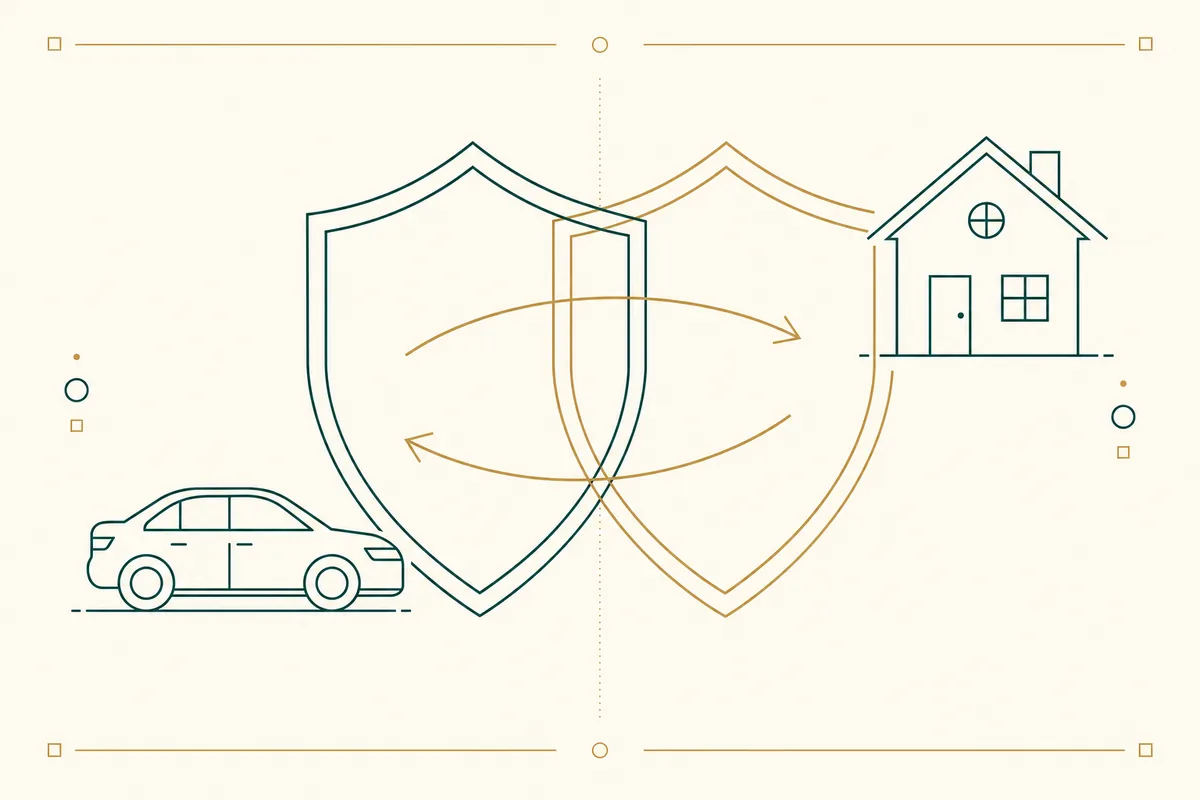
Yes — Michigan is a no-fault state. Every Michigan driver must carry Personal Injury Protection (PIP), and after a crash your own insurer — not the at-fault driver's — pays your medical bills, wage loss, and replacement services, regardless of who caused the accident. Suing the at-fault driver is reserved for serious injuries that meet Michigan's threshold, plus a small $3,000 mini-tort claim for vehicle damage. This guide explains the PIP side of that system: what it covers, the coverage levels, who pays, and the deadlines that decide claims.
What Is PIP Insurance in Michigan?
Quick answer: PIP — Personal Injury Protection — is the part of every Michigan auto policy that pays your own medical bills, a portion of your lost wages, and certain household services after a car accident, regardless of who caused the crash. It is the heart of Michigan's no-fault system. Since the 2019 reform, drivers choose a PIP medical coverage level rather than automatically receiving unlimited benefits, which makes understanding your selection — and the strict claim deadlines — more important than ever. If an insurer is delaying, cutting off, or denying your PIP benefits, Koussan Law's no-fault PIP team can help. Call (313) 800-0000 for a free consultation.
What PIP Covers in Michigan
Allowable medical expenses. Reasonably necessary products, services, and accommodations for your care, recovery, or rehabilitation — hospital care, surgery, medication, physical therapy, medical mileage, home modifications, and in serious-injury cases attendant care provided at home, sometimes by family members. Providers bill under a state fee schedule adopted with the 2019 reform.
Work loss. If injuries keep you from working, PIP pays a substantial portion of your lost income (85%, on the theory that benefits are tax-free) for up to three years after the accident, subject to a monthly maximum that the state adjusts annually.
Replacement services. Up to $20 per day for household tasks you can no longer perform — cleaning, yard work, childcare-related chores — for up to three years.
Survivor's loss benefits. When a crash is fatal, dependents may receive benefits replacing the income and services the deceased would have provided, subject to the same three-year window and monthly caps.
PIP Coverage Levels After the 2019 Reform
Since July 2020, Michigan drivers select a PIP medical level at each renewal under MCL 500.3107c. The choices are: unlimited lifetime medical coverage; $500,000 per person per accident; $250,000 per person per accident; a $250,000 option with exclusions for drivers whose qualified health coverage pays crash injuries; $50,000 for drivers enrolled in Medicaid (with household conditions); and a full opt-out for drivers with Medicare Parts A and B whose household members carry their own coverage. Your choice matters enormously: a catastrophic injury can exhaust a capped policy quickly, and injuries outlasting a capped policy shift costs onto your health insurance — which does not pay attendant care, replacement services, or wage loss.
Two practical warnings. First, if you never make a selection, your policy defaults to unlimited coverage at the corresponding premium. Second, opting down or out to save premium dollars is a bet that no one in your household suffers a catastrophic crash injury — a bet that should be made with full information, not by initialing a form at renewal. Your selected level is printed on your policy's declarations page — if you are not sure what you chose, our guide to reading a Michigan declaration page shows exactly where to find it.
Who Pays Your PIP Claim? Michigan's Priority Rules
Post-reform, the order of priority for injured occupants is generally: your own auto policy first; then a policy issued to your spouse or a resident relative; and if no policy exists in the household, the Michigan Assigned Claims Plan (MACP) — not the driver of the car you were in. Motorcyclists injured in crashes with motor vehicles follow their own priority chain that starts with the involved vehicle's insurer. Getting priority wrong wastes months, so this is one of the first things we sort out in every no-fault case.
The Deadlines That Kill PIP Claims
One-year notice. Under MCL 500.3145, the insurer must receive written notice of injury within one year of the accident, or the claim is barred entirely.
The one-year-back rule. Even with a timely claim, if you file suit over unpaid benefits, you generally cannot recover expenses incurred more than one year before the lawsuit was filed. Insurers know this and benefit from every month of delay — which is why "we're still reviewing your file" for months on end is not harmless.
Claims through the Assigned Claims Plan have their own notice requirements and documentation demands, and MACP claims are scrutinized aggressively.
When Insurers Cut Off Benefits — and What You Can Do
The most common PIP disputes we see: an insurer's "independent" medical examiner declares you recovered and benefits stop overnight; wage-loss checks arrive late or partially; attendant care hours provided by family go unpaid or are slashed; medical bills sit unpaid until providers send you to collections; or the insurer refuses a treatment as "not reasonably necessary." None of these is the end of the claim. Michigan law allows you to sue for overdue benefits plus statutory interest, and in appropriate cases attorney fees when a denial was unreasonable. Medical providers can also pursue unpaid balances directly — an area where our firm has recovered extensively on behalf of Michigan medical providers as well as injured drivers.
PIP vs. the Rest of Your Claim
PIP is only half of Michigan's system. It pays economic losses regardless of fault — but it never pays for pain and suffering. Compensation for the injury itself comes from a separate third-party claim against the at-fault driver, available when injuries meet the serious impairment threshold of MCL 500.3135. Vehicle damage follows its own rules: collision coverage, or Michigan's mini tort for limited recovery from an at-fault driver. A complete case strategy runs all tracks at once; see our overview of how Michigan no-fault works after the 2019 changes.
Frequently Asked Questions
Q: Is Michigan a no-fault state?
Yes. Michigan is a no-fault state: your own auto insurer pays your crash medical bills and wage loss through PIP no matter who caused the accident, and claims against the at-fault driver are limited to serious injuries and the $3,000 mini-tort. Michigan's version is unusual — it is the only state where drivers can still choose unlimited lifetime PIP medical coverage.
Q: Is PIP required in Michigan?
Yes. PIP is mandatory coverage on Michigan auto policies; what changed in 2019 is that you now choose your medical coverage level.
Q: Does PIP pay if the accident was my fault?
Yes. PIP is no-fault coverage — your benefits do not depend on who caused the crash.
Q: I was a passenger. Whose PIP pays me?
Usually your own policy or a household member's policy — not the driver's — unless you have no household coverage, in which case the Assigned Claims Plan may apply.
Q: Can my family be paid for taking care of me?
Often yes. Attendant care provided by family members is compensable when medically necessary and properly documented — and it is one of the benefits insurers fight hardest.
Q: The insurer cut off my benefits after an "IME." Is that final?
No. An insurer-hired examiner's opinion is not the last word. Many cutoff cases end with benefits restored and back benefits paid with interest.
Q: Do I need a lawyer for a PIP claim?
For a smooth claim with minor injuries, maybe not. The moment benefits are delayed, reduced, or denied — or the injuries are serious — an experienced no-fault attorney typically recovers far more than the cost of hiring one. Consultations are free either way.
Talk to a Michigan PIP Attorney — Free, Confidential
Koussan Law has spent decades inside Michigan's no-fault system, representing injured drivers, passengers, motorcyclists, and the medical providers who treat them. If your PIP benefits are delayed, cut off, or denied — or you simply want your claim handled right from day one — call (313) 800-0000 or contact us online. You pay nothing unless we win.
For the underlying crash numbers behind these claims, see our county-by-county Michigan crash data report.
One naming note: the statute formally calls PIP “personal protection insurance” — it is the core of no-fault insurance in Michigan, so you will see both terms used interchangeably.