Detroit Bicycle Accident Lawyer: Why Cyclists Get No-Fault PIP, the 3-Foot Law, and How These Cases Are Built
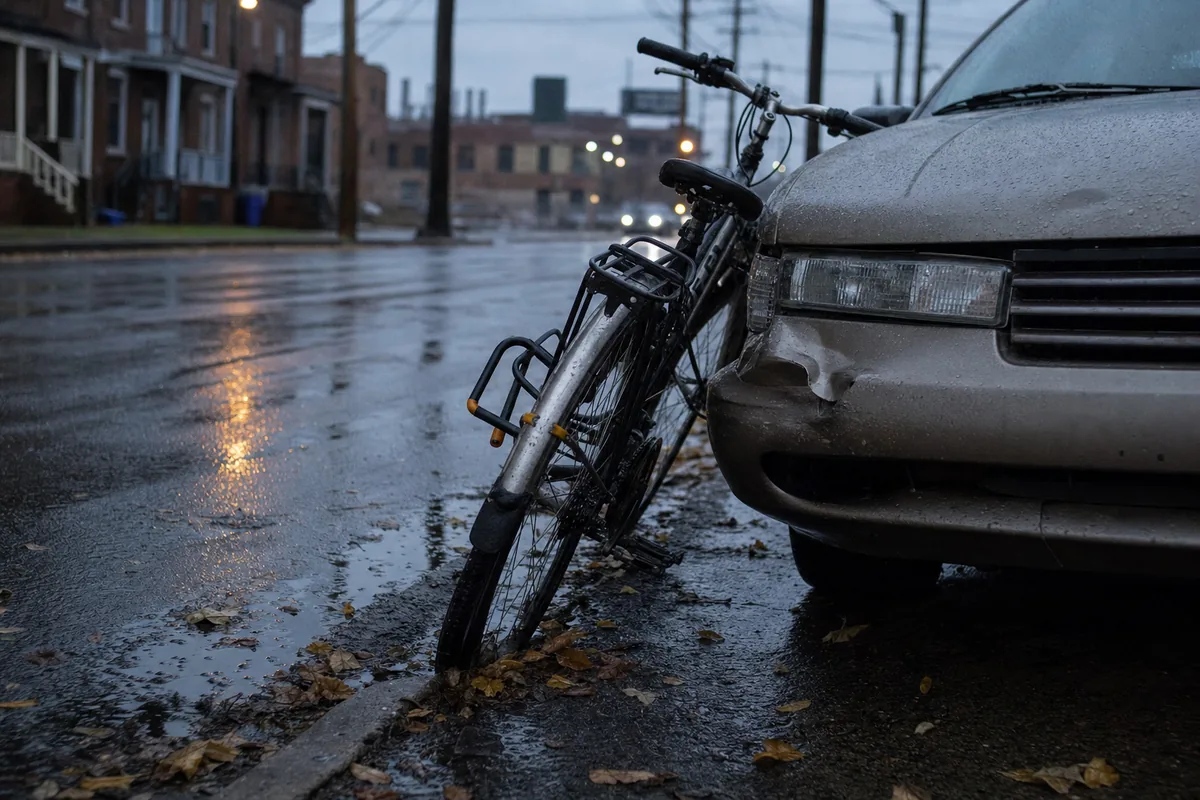
Short answer: A bicycle is not a motor vehicle under Michigan's No-Fault Act, so a cyclist struck by a car or truck is treated like a pedestrian for insurance purposes. That means the injured cyclist is entitled to full Personal Injury Protection (PIP) benefits under MCL § 500.3115, even if the cyclist does not own a car and has no auto insurance of their own. PIP pays medical bills, lost wages, attendant care, and replacement services regardless of who caused the crash. On top of PIP, a separate third-party tort claim can be brought against the at-fault driver for pain and suffering, provided the injury meets the serious impairment of body function threshold under MCL § 500.3135. Michigan also gives cyclists the rights and duties of vehicle drivers and protects them with a 3-foot safe-passing law. Detroit's mix of new greenways and high-speed arterials makes it both one of the best and one of the most dangerous places to ride in the state.
This guide explains the PIP-for-cyclists rule, the traffic laws that govern riding in Michigan, the crash patterns that produce most cases, the third-party tort framework, Detroit's danger corridors and trails, the damages available, and the deadlines that control these cases.
The MCL § 500.3115 Rule: Cyclists Get PIP Even Without a Car
Because a bicycle is not a motor vehicle, an injured cyclist is not an "owner" or "operator" of the vehicle involved and is treated like a pedestrian under the No-Fault Act. PIP coverage applies through the priority order in MCL § 500.3115:
- The cyclist's own auto insurer, if they have a policy.
- The auto insurer of a resident relative with whom the cyclist lives.
- The insurer of the motor vehicle that struck the cyclist.
- The Michigan Assigned Claims Plan, if no other coverage applies.
The Assigned Claims Plan is the backstop that lets an uninsured cyclist still receive PIP; coverage there is capped at $250,000 in medical with the standard No-Fault scope (medical, 85% of lost wages for up to three years, replacement services, and attendant care under MCL § 500.3107). Cyclists who carry their own auto policy receive whatever PIP tier they selected under the 2019 reforms, up to unlimited lifetime medical.
This is the single most important thing for an injured cyclist to know: you very likely have medical and wage-loss coverage even though you were on a bike and even if you have no car insurance. See our closely related Detroit pedestrian accident lawyer guide, which runs on the same MCL § 500.3115 framework.
The Third-Party Tort Claim Against the Driver
PIP does not pay for pain and suffering. For those non-economic damages, the cyclist brings a separate third-party tort action against the at-fault driver under MCL § 500.3135, which requires meeting the serious impairment of body function threshold. The McCormick v. Carrier, 487 Mich. 180 (2010) framework controls the analysis. Cyclist-versus-vehicle injuries (fractures, traumatic brain injury, road rash with permanent scarring, spinal injury) routinely satisfy the threshold. The claim taps the at-fault driver's bodily injury liability coverage; where that is insufficient, the cyclist's own underinsured-motorist (UIM) coverage steps in if carried.
Michigan Traffic Law for Cyclists
- Rights and duties of a driver. Under MCL § 257.657, a person riding a bicycle on a roadway has the rights and is subject to the duties of a vehicle driver. Cyclists are legitimate road users, not trespassers on the road.
- The 3-foot safe-passing law. Michigan law (MCL § 257.636) requires a driver overtaking a cyclist to pass at a safe distance of at least 3 feet. A violation is strong evidence of negligence in a sideswipe or pass-too-close crash.
- Position on the roadway. MCL § 257.660a generally directs cyclists to ride as near to the right as practicable, with important exceptions (avoiding hazards, debris, parked cars and the door zone, substandard-width lanes, and when preparing to turn left). Defense counsel often misuses this rule to blame the cyclist; the exceptions matter.
- No adult helmet mandate. Michigan has no statewide bicycle-helmet law for adults. Not wearing a helmet is not negligence per se, though insurers may argue comparative fault on head-injury damages. The absence of a helmet does not bar a claim.
- Lights and reflectors are required for night riding under Michigan law; their presence or absence becomes a fact issue in low-light crashes.
The Crash Patterns That Produce Most Cases
- The right hook. A driver passes a cyclist and immediately turns right across the cyclist's path, or a right-turning driver fails to see a cyclist on their right. One of the most common and most serious patterns.
- The left cross. An oncoming driver turns left across the path of a through-riding cyclist, failing to yield.
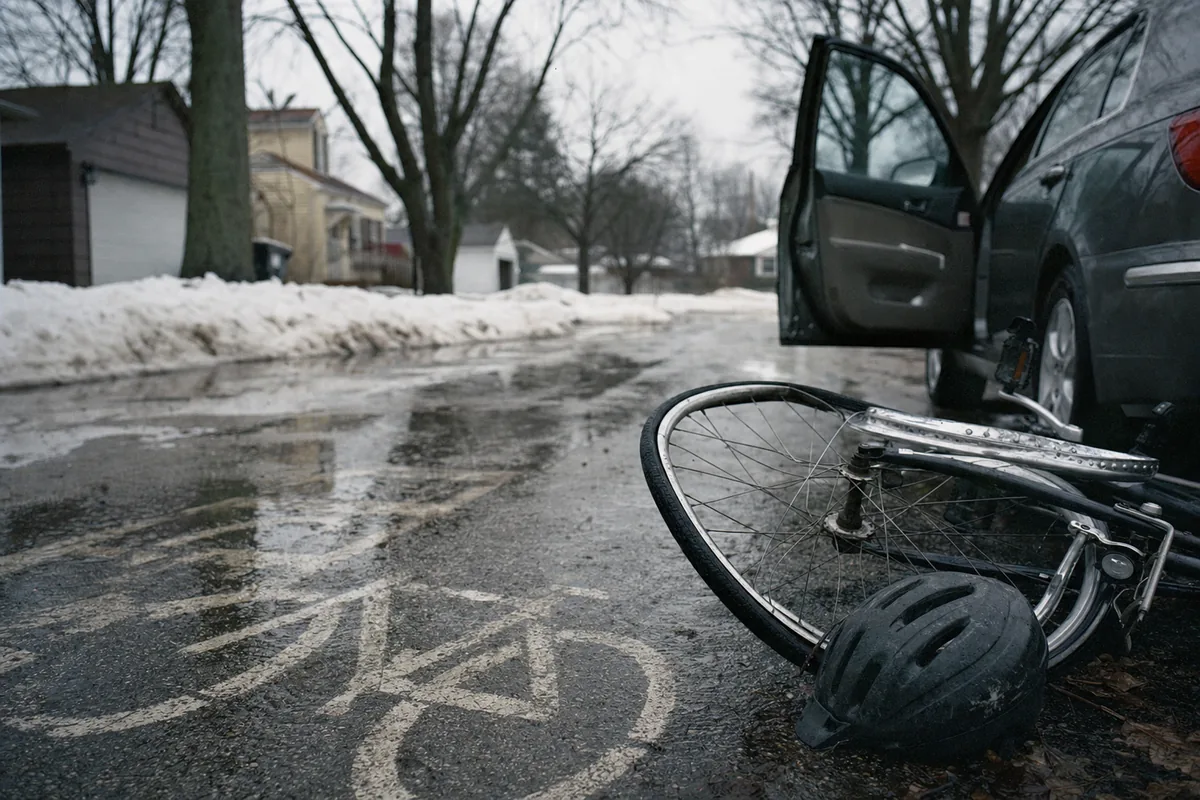
- Dooring. An occupant of a parked car opens a door into the path of a passing cyclist. Michigan law prohibits opening a vehicle door into traffic when unsafe; dooring throws the cyclist into the door or into the travel lane. This is why riding outside the door zone is lawful and prudent.
- Failure to yield at intersections and driveways. Drivers entering or crossing a roadway who do not see the cyclist.
- Rear-end / overtaking strikes. Distracted or impaired drivers hitting a cyclist from behind, often tied to a 3-foot-law violation.
- Hit-and-run. Detroit has elevated hit-and-run rates. The cyclist's own Uninsured Motorist (UM) coverage applies if carried; PIP applies regardless; the Assigned Claims Plan covers PIP if the cyclist has no auto insurance.
Detroit's Trails and Danger Corridors
Detroit has invested heavily in cycling infrastructure, which concentrates ridership and, with it, crash exposure where trails meet streets:
- The Dequindre Cut, Detroit RiverWalk, and the Joe Louis Greenway. Heavy recreational and commuter ridership; conflict points arise where these crossings meet vehicle traffic at grade.
- Protected and painted bike lanes on Cass Avenue, Second Avenue, and East Jefferson. Higher cyclist volume, with right-hook and dooring risk where lanes run beside parking or turn lanes.
- Wide arterials: Woodward, Gratiot, Michigan Avenue, Grand River, and Jefferson. High vehicle speeds and multi-lane crossings make cyclist strikes especially severe.
- Wayne State University and Midtown. Dense student cycling traffic mixing with downtown vehicle flow.
Damages Available in a Detroit Bicycle Accident Case
- Past and future medical expenses, paid by PIP up to the applicable tier or Assigned Claims Plan cap, supplemented by the third-party claim.
- Lost wages, 85% of gross for up to three years under PIP, with longer-term wage loss available through the tort claim for serious injuries.
- Attendant care and replacement services under MCL § 500.3107, subject to the post-2019 caps.
- Pain and suffering and loss of enjoyment of life, third-party tort, requires meeting the serious-impairment threshold.
- Permanent scarring and disfigurement, common in road-rash and degloving injuries.
- Loss of consortium for a spouse.
- Wrongful death damages under MCL § 600.2922 in fatal cases. See our Detroit wrongful death lawyer guide.
Comparative Fault: The Defenses Aimed at Cyclists
Michigan follows modified comparative negligence under MCL § 600.2959. A cyclist found more than 50% at fault is barred from non-economic damages, and any recovery is reduced by the cyclist's percentage of fault. Defense counsel routinely argues the cyclist ran a light or stop sign, rode against traffic, was not in a bike lane, wore dark clothing at night, had no lights, or was not wearing a helmet. Each argument is met with the rules above (including the lawful exceptions to riding far-right), the driver's own conduct (phone records, speed, the 3-foot law), and physical and reconstruction evidence.
Government-Vehicle Involvement: The 120-Day Notice Trap
If a city bus, government vehicle, or a defective roadway maintained by the City of Detroit, Wayne County, or the State is involved, MCL § 691.1404 requires written notice within 120 days of the incident to the responsible entity. Missing this short window is a common reason claims against government defendants are barred.
Wayne County Circuit Court for Detroit Bicycle Cases
Bicycle-accident lawsuits arising in Detroit are filed in the Third Judicial Circuit Court (Wayne County Circuit Court), at the Coleman A. Young Municipal Center, 2 Woodward Avenue, Detroit. The court enforces strict scheduling orders, so early preparation matters.
What to Do After a Bicycle Crash in Detroit
- Get medical evaluation immediately. Head and internal injuries can present hours later; documented care creates the medical baseline.
- Call police and get a UD-10 crash report. Insist the cyclist's account is recorded; request the report number.
- Identify the driver, vehicle, and insurance, and get witness names and numbers.
- Photograph everything: the scene, the vehicle, your bike, your injuries, sightlines, lane markings, and any surveillance camera locations.
- Preserve the bicycle, helmet, and clothing exactly as they are. The damaged bike and gear are evidence; do not repair or discard them.
- Do not give a recorded statement to any insurer before speaking with counsel.
- Identify your PIP path early. Your own auto policy (if any), a resident relative's policy, the striking vehicle's insurer, or the Assigned Claims Plan. Engage counsel quickly; the 1-year PIP limit under MCL § 500.3145 and the 120-day government-notice deadline run fast.
Frequently Asked Questions: Detroit Bicycle Accident Lawyer
Q: I was hit on my bike but I don't own a car. Do I have any insurance coverage? Almost certainly yes. Because a bicycle is not a motor vehicle, you are treated like a pedestrian and entitled to PIP benefits under MCL § 500.3115, through your own policy, a resident relative's policy, the striking vehicle's insurer, or the Michigan Assigned Claims Plan if none applies.
Q: The driver says I should have been in the bike lane or further right. Does that sink my case? Not by itself. MCL § 257.660a has important exceptions allowing cyclists to leave the far-right position to avoid hazards, the door zone, debris, and narrow lanes, or to turn. The driver's failure to pass with 3 feet under MCL § 257.636 often matters far more.
Q: I wasn't wearing a helmet. Can I still recover? Yes. Michigan has no adult helmet law, so not wearing one is not negligence per se. Insurers may argue comparative fault on head-injury damages, but it does not bar your claim.
Q: How long do I have to file? Generally three years for the third-party tort claim under MCL § 600.5805, one year for PIP benefits under MCL § 500.3145, and 120 days for written notice if a government vehicle or road defect is involved under MCL § 691.1404.
Q: I was doored by a parked car's occupant. Who is responsible? The person who opened the door into your path. Opening a door unsafely into traffic is a violation, and these cases turn on the cyclist's lawful position outside or at the edge of the door zone.
Q: How much does a Detroit bicycle accident lawyer cost? Contingency fee. Standard structure: 33⅓% of the recovery pre-trial, sometimes 40% if the case goes to trial. Costs are reimbursed from the recovery. No upfront cost, and no fee unless we recover.
Speak With a Detroit Bicycle Accident Lawyer
If you or a loved one was struck while cycling in Detroit or anywhere in Wayne County, contact Koussan Law for a free, confidential consultation. Many injured cyclists do not realize they are entitled to No-Fault PIP, and the PIP and government-notice clocks run quickly. We accept Michigan bicycle accident cases on contingency; you pay nothing unless we recover. Our trial record includes a $14.95 million jury verdict against Pontiac General Hospital, a $6 million premises liability settlement, a $1 million wrongful death settlement, and arguments before the Michigan Supreme Court. Call (313) 800-0000, request a consultation online, or use our free case calculator. Spanish and Arabic language services available.
Related Resources
- Bicycle Accidents service page
- Detroit Personal Injury Lawyer
- Wayne County Personal Injury Lawyer
- Michigan No-Fault Attorney
- Detroit Pedestrian Accident Lawyer Guide
- Detroit Motorcycle Accident Lawyer Guide
- Detroit Uber and Lyft Accident Lawyer Guide
- Detroit Car Accident Lawyer Guide
- Michigan Personal Injury Case Value Guide
- Pothole and Bad-Road Damage Claims Against the Government
- Multi-Vehicle Pileup Crashes in Michigan
- Recovering When You Are Partially At Fault
- Filing a Claim Without a Police Report
- Understanding Brain Injuries After a Crash
Past results do not guarantee future outcomes. Every bicycle accident case is fact-specific and depends on the available evidence, the PIP-priority chain, the threshold-of-injury analysis, the comparative-fault apportionment, and qualified expert review. This article is for general informational purposes and is not legal advice. Reading this article does not create an attorney-client relationship with Koussan Law.